The session hosted at the Tate Modern concluded “a three-day exploration of the state of art and science now” covering sessions at the Science Museum and DANA centre in previous days.
Appropriately, a hand raising revealed an equally split audience of artists and scientists coming together to discuss “The Two Cultures” 50 years after C.P. Snow lecture.
The panel of speakers consisted of long-established writers, broadcasters and scientists that communicated with clarity and wit historical and current affairs of 'the cultural divide' to a broader audience.
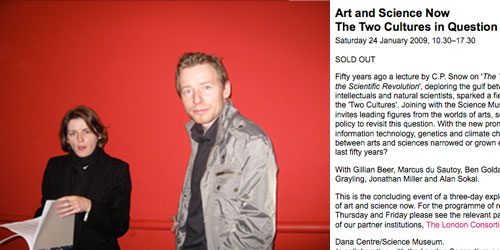
Elaine French and Howard Boland (c-lab)
In first part (with Marcus du Sautoy, Anthony Grayling and Gillian Beer) Marcus du Sautoy covered the area of Mathematics as a bridge between science and art, particularly in relation to music, mentioning Bach's 'Goldberg Variations' and Xenakio's 'Nano Alpha'. A particular connection for Marcus du Sautoy's background as a Mathematician is the concept of symmetry not only found in evolutionary design and beauty but something that tells us how mathematics as a language is an artistic expression (citing Alhambra in Spain as an example).
Anthony Grayling described the historical split between the humanities and sciences and the shifting in power from the former to the later. He suggested that the rise of the German University Powerhouse as a result of moving away from Latin (the language of education at the time) was the starting point of this change and became fuelled by the need of new war machines through the first and later the second world wars. Technical Universities were particular in implementing the new model. Still, the shift in focus from humanities as a central knowledge body to the sciences and an increased specialization created a need to retain a link, indeed in the 1950s scientist at Technical Universities were given textbooks such as Hen’s “Poetry for Scientists”. Now, fifty years on, the situation in Graylings belief is one where the two cultures stand further apart. He mentions an alarming lack of scientific knowledge highlighted by the situation in America where debates on evolution are still ongoing. To lift the distance he suggests education as a common ground: “Education should not be something that stops at 21, it should last throughout life”.
From a different angle, Gillian Beer brings in the concept of extinction in relation to Darwin. At the time of “The Origin of Species”, the word 'extinction' was only 60 years old and seen controversial by revealing Gods creation not to be intact(!). The idea of extinction and our relation to the concept has radically changed. Indeed, our outlook of climate change and cataclysm or fear of apocalypse was something that Darwin and his contemporary would scoff at. However, faced with a loss of up to 50% of all species in the next 50 years and the underlying human guilt as being the cause forces us to rethink ideas of extinction. So does the changing view of experiencing animals as moving motivated subjects through film and tv, which in comparison with Darwin’s days mostly happened via taxidermy. Finally perhaps, is the loss of religion that renders our life into final closure, no longer expecting an afterlife and so we see ourselves becoming extinct. The point Beer is making about the Natural World is that it is not committed to its progeny rather it leads on an ever transition to the next point in evolution. For Darwin, this movement through extinction was one of fruitfulness and even perfectibility (despite his denial).
The roundtable discussions considered problematics of increased specialization, role of artists in labs, the benefits for scientists in this relationship and a need for us all to actually take the long stride and learn.
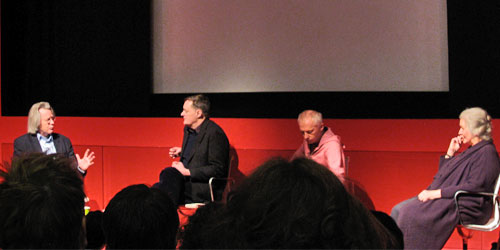
Roundtable discussion with Marcus du Sautoy, Anthony Grayling and Gillian Beer chaired by Patrick Wright.
The after lunch session with Jonathan Miller (in talk with Colin MacCabe) looked at the relationship between his artistic and scientific life from his education as a neurologist to his later life as a writer, presenter and director of plays and operas. Miller, in his nonchalant theatrical manner, scoffed at the idea of the variations between the two cultures in his own life – rather he felt, they had a natural mixture, mentioning his first erotic novel, Malinowski’s on the body of indigenous tribes. He recalled his fascinations with sea urchins that he would crack open to ponder the wonders of cell division. The artistic aspect of his life was something that found him rather than the opposite, moving from acting to later directing operas. He scorned at what he called postmodern German conceptual dribble and made a short attack on the whole idea of artists in (lab) residencies by recalling the Modernist movement; In the period 1905-1910 artists were naturally susceptible to the scientific new finding rather then having to undertake any residency “for we are all residents in each other”. A coherent atmosphere can cross these fields, indeed art can cross into the other - provoking “from Cubism to camouflage” and “from artists’ in residencies to artists in uniforms”.
Bad Science column writer Ben Goldacre took the podium criticizing what is called Feynman chasers using a series of example of alarming public belief or laziness in the matters of science. Examples such as “Cannabis is 25 stronger” than 10 years ago, several bizarre equations used by newspapers to calculate ever more ludicrous aspects of life (ie. the best Christmas turkey), to serious scientists selling out on speculations about the future (for a couple of grand). His central example was the infamous MRSA hoax in which UK hospitals where being headlined by newspapers as plague zones using a “Doctor” Christopher Malyszewicz as their backing figure. His lab finally turned out to be a small garden shed at the back of his house, and the bacteria exceptionally wrongly identified by Malyszewicz as rod shaped not globular. However the story lasted a long period with headlines announcing Malyszewicz as a leading expert in the field across papers without anyone calling the hoax, that was until Goldacre came along.
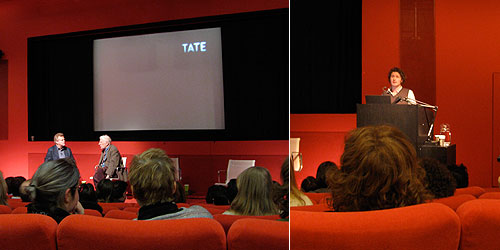
Jonathan Miller in conversation with Colin MacCabe, Ben Goldacre's talk.
Finally, Alan Sokal the NYU physics professor and UCL mathematics professor who became known in the human ethic world through the Sokal affair where he submitted an article in Social Text magazine deliberately salted with fashionable nonsense. The article was accepted by the journal and became part of what is know as 'the science wars', an intellectual battle with postmodernists raging on the topic of objectivity through the 1990s. Sokal described the scientific world view as one that announces clear thinking, respect for evidence and survival of the fittest theory. As a criticism to Bruno Latour and other relative constructivist he points to problems this produces such as not acknowledging alarming findings like global warming. Next on the list for Alan was homeopathy, describing it as a reckless spending of taxpayers money. However, none of this weighed up against the issue of religion – however here the solution would be as simple as changing a word – from faith to superstition – and he went reading the American scripture using this replacement.
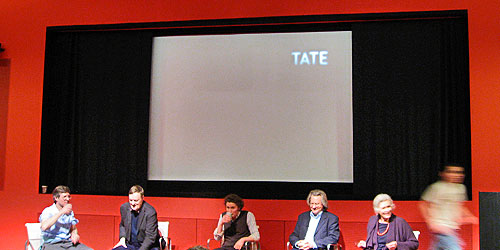
Final Roundtable discussion with Alan Sokal, Ben Goldacre, Anthony Grayling and Gillian Beer, chaired by Patrick Wright