Historical Overview on Plant Neurobiology
Rainer Stahlberg
University of Washington
Plant Signaling & Behavior (2006) 1:1, 6-8
This paper gives a scope of the historical lineage regarding electrical signalling in plants.
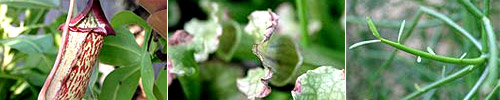
For a long time plants were thought to be living organisms whose limited ability to move and respond was appropriately matched by limited abilities of sensing. [Anthony Trewawas]
Rapid movements from sensitive plants [sundew, flytraps, climbing plants] caught the attention of researchers such as Darwin, Bose, Burdon-Sanderson and Burdon-Sanderson. Their research showed that these sensitive plants were not only equipped with various mechanoreceptors exceeding the sensitivity of a human finger but also to trigger action potentials (APs) that implemented these movements.
By the 19th century, APs were considered a comparable role in plants and nerve muscle preparation of animals [although this was not generally accepted]. A scientific breakthrough in 1962 where it was found that other plants [such as pumpkin] also had propagating AP just like the ‘sensitive plants’ leading to the view that these electrical signals must carry important messages thus linking electrical signals with plants processes - respiration, pollination, phloem transport and defence.
Comparisons between animals and plants different capacities to respond to environmental signal show plants have more than just one signal type. They can efficiently produce electrical signals in form of AP (like animals and lower plants) but higher plants also have a hydraulically propagated type called - slow wave potentials.