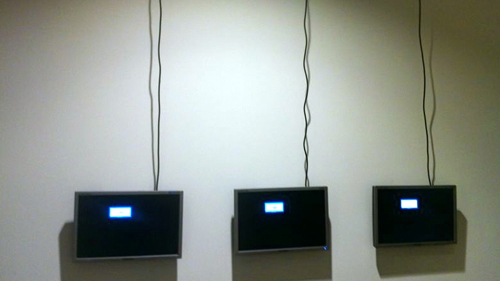
Arrival
NatLab, Eindhoven
The first crates are opened on the morning of the 26th. Before Living Mirror can respond to anyone, every part — vessels, optics, magnetic coils and control electronics — has to find its place in an unfamiliar room.
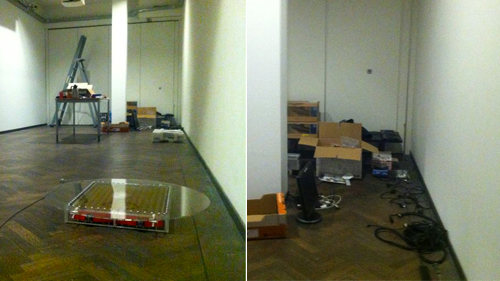
First Light
Bringing the display up
By the afternoon the display is powered for the first time on site. Calibration is slow: the bacteria are alive, and the image they form depends on temperature, density and the steady pull of the field.
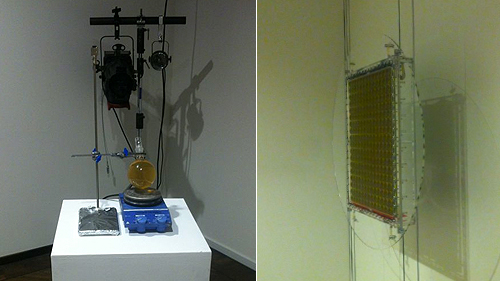
Into Position
Assembling the mirror
Day two is spent setting the piece into its final position — aligning the optics and the magnetics so that the swarm reads cleanly as a single, shifting surface for visitors to stand before.
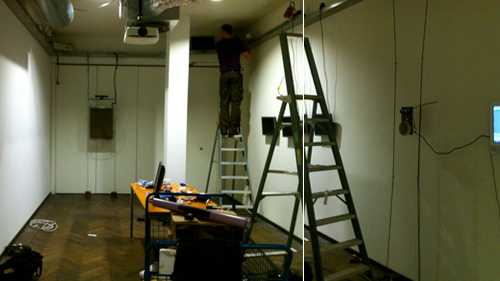
Ready
A living surface
With the last adjustments made, Living Mirror holds steady — some eight billion organisms moving in concert, a reflection drawn not in glass but in life, waiting for the room to fill.