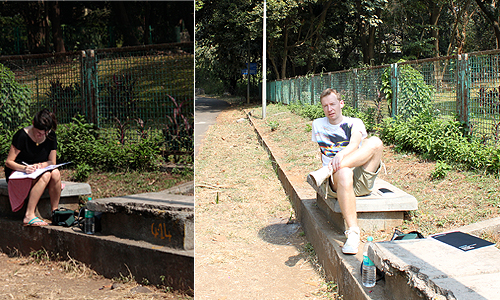
We waited for access to the lab and tried to explain to festival managers the impossible equation of only starting lab work the following evening. E.coli takes at least 16 hours to grow, and this is done overnight, we needed to prepare media and slowly grow them up to the volumes required for the exhibition which would take, at least, several days.
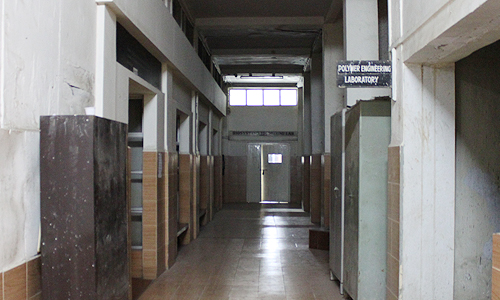
We were finally taken to meet the Professor of the Biological Systems Engineering Laboratory at 6:15pm. Professor Pramod Wangikar understood our problem and requirements, which included taking out one of their most precious items, an expensive fermenter. This also meant we had to terminate one of the researchers experiment early.
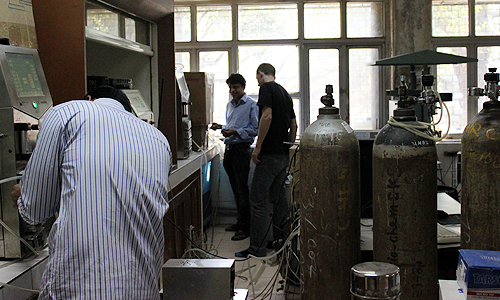
With incredible kindness, he decided to open the space to us and introduced us to Dr Sandeep Gaudana, a post-doc and PhD researcher, Krishna Kumar, who would assist us during our three days in the lab.
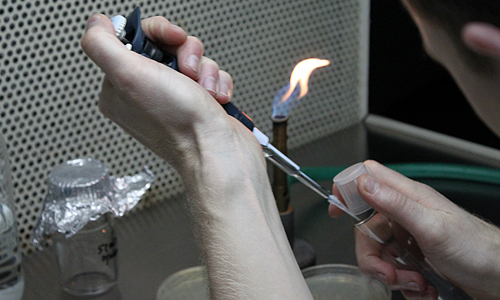
Two hours later, we began our work. The researchers were very surprised to hear that we were artists working in the field, and more so that we would be doing this work ourselves. Plates and media were brought in and we immediately started the inoculation of cultures.
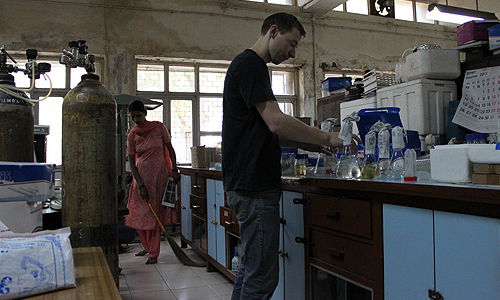
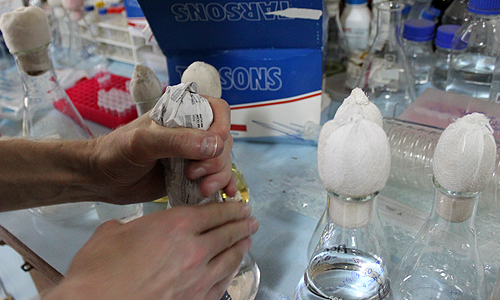
The labs were different to what we had been accustomed to back in the UK and many fascinating details like the “turban-headed sponge stoppers” caught our eyes.
The research conducted in this lab (at least amongst the group of researchers we worked with) looked at cyanobacteria. Their fermentation setup was particularly interesting as it meant building an artificial house around it to provide the organisms with artificial light.