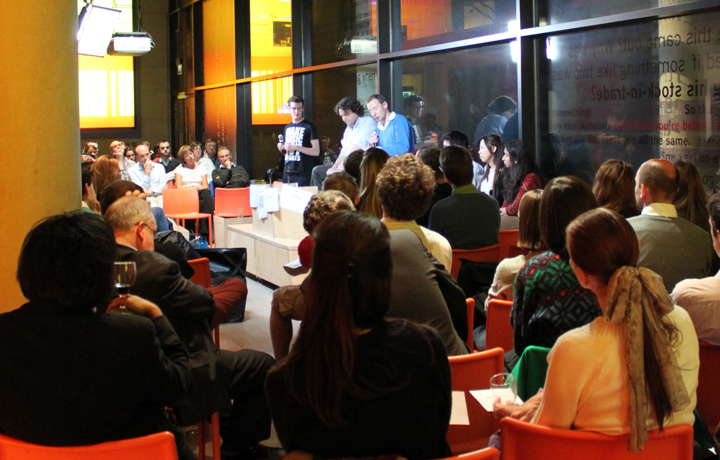
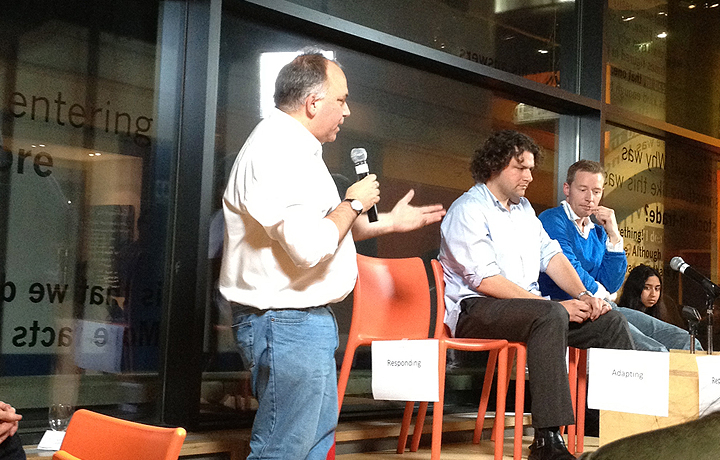
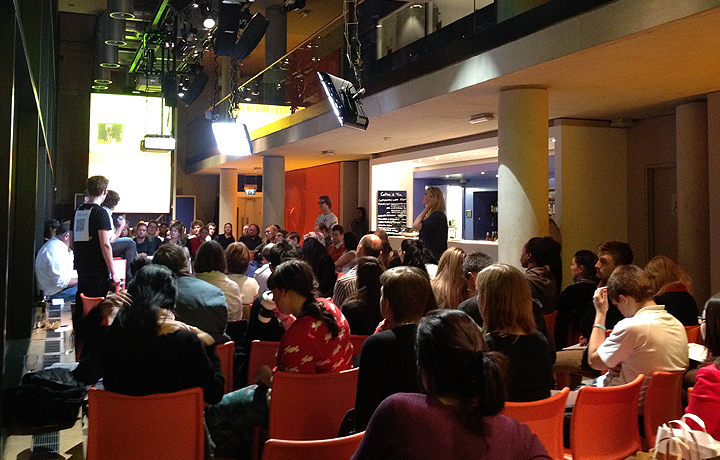
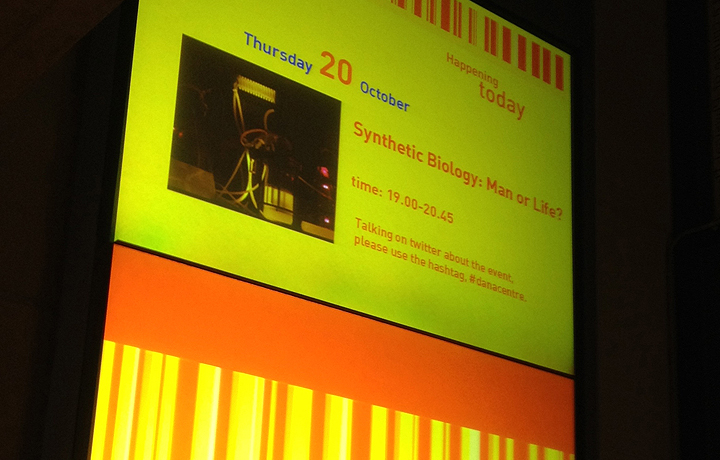
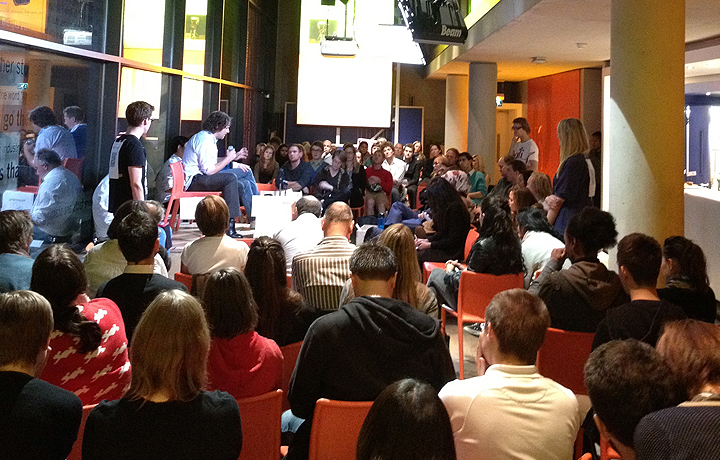
Finalising UCL’s iGEM activities for 2011 was the art-meets-science event focusing on synthetic biology at the Science Museum’s Dana Centre in London as part of the London Science Festival programme. The event included a panel discussion organised by UCL iGEM and a series of video screenings liaised by Laura Cinti (C-LAB) .
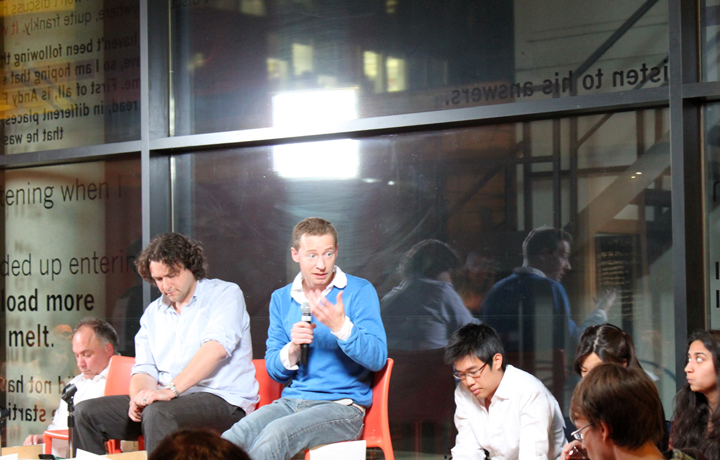
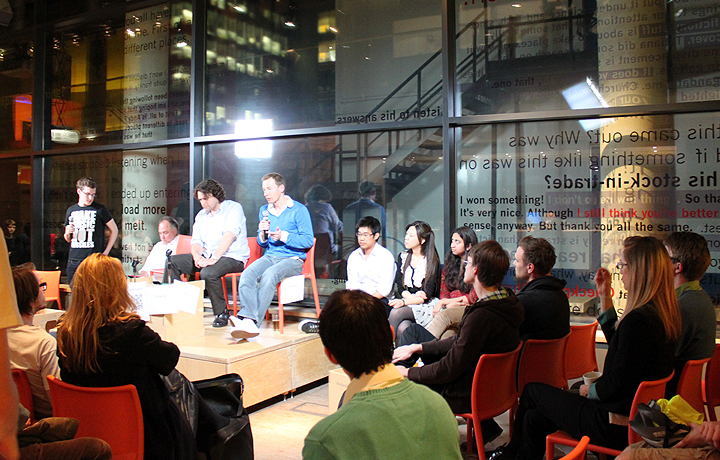
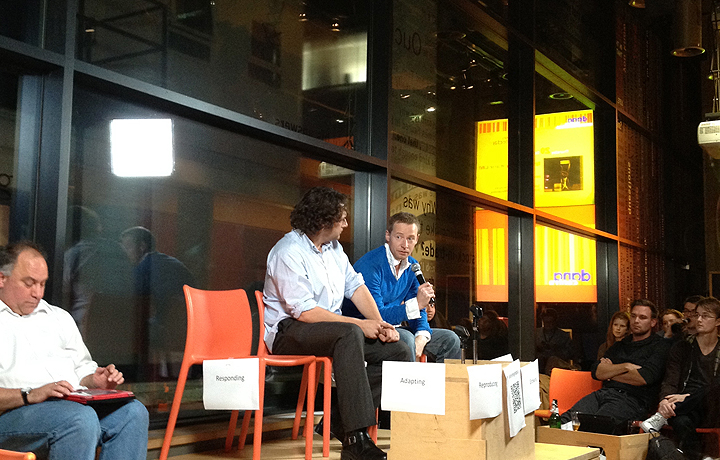
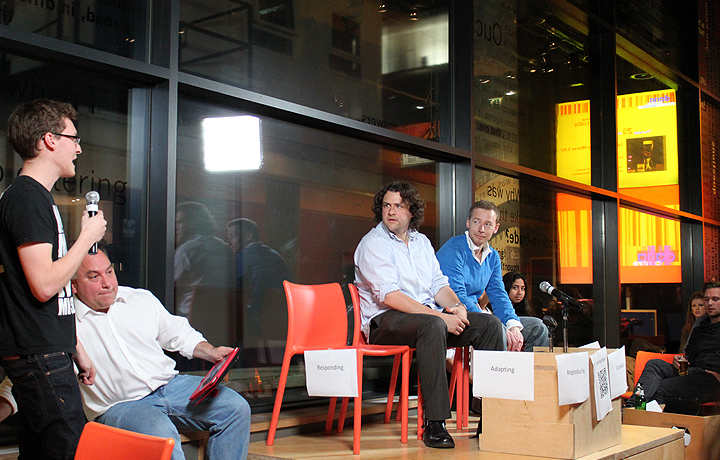
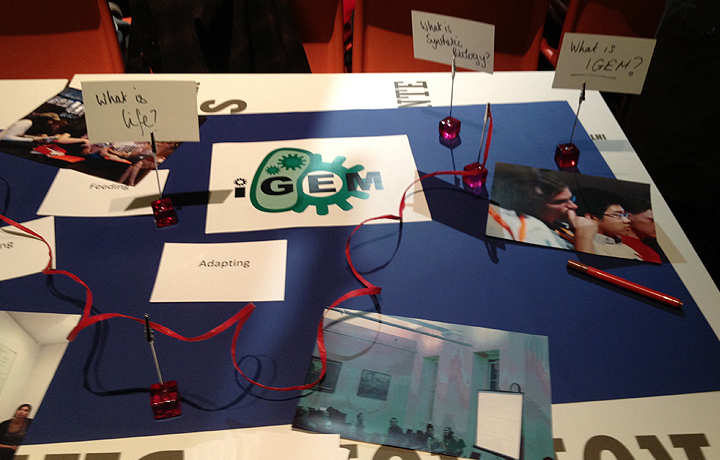
The discussion panel with talks by Philipp Boeing (UCL iGEM 2011), Dr Joe Cain (UCL), Howard Boland (C-LAB) and Dr Brendan Clarke (UCL) looked at how synthetic biology operates as part of the International Genetically Engineered Machine competition (iGEM), scientifically and in socio-political contexts. Questions were raised on how the public(s) can take ownership and play a role in the development of synthetic biology. There is a sense of dissonance between the impact we have on technological development and the role they play in shaping our future. For many in the audience there was a need to discuss how we become stakeholders in these debates.
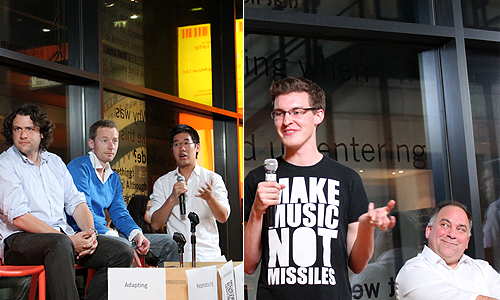
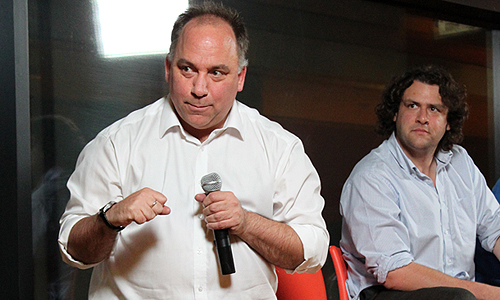
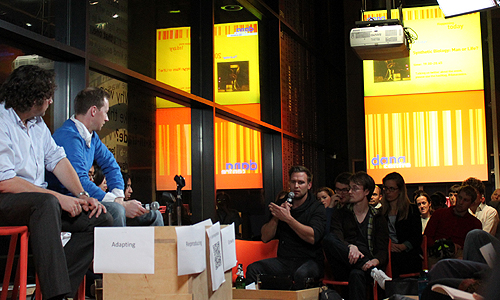
Synthetic Biology debate at the Dana Centre, Science Museum, London.
The topic of the event was 'Synthetic Biology: Life or Machine' and, as some suggested, the synthetic may be thought of as a fusion between 'Life and Machine' rather than a separation. Discourses of 'Life-Machine' have a ramified history, stretching back to the ancient Greeks and was perhaps most potently communicated by the 17th century philosopher and physician Julien Offray de La Mettrie in his book ‘L'homme Machine’. How is synthetic biology tackling notions of 'Life and Machine' through its application of engineering principles and terminologies to biology? Phrases such as 'chassie' are used to describe 'organisms'. This suggests that DNA is an interchangeable 'engine' between 'shell's of organisms'.
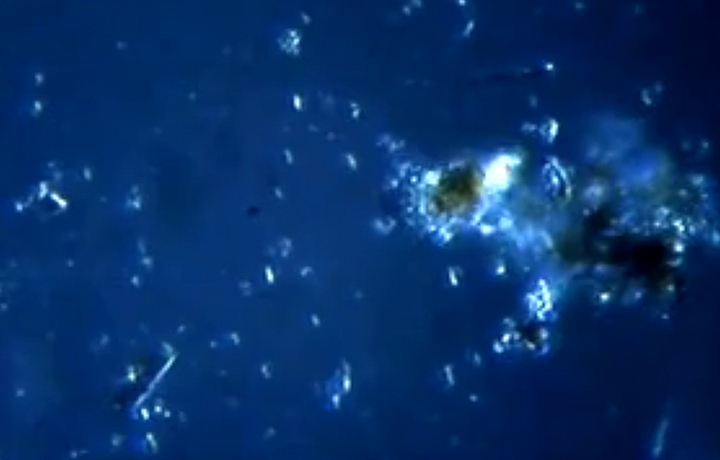
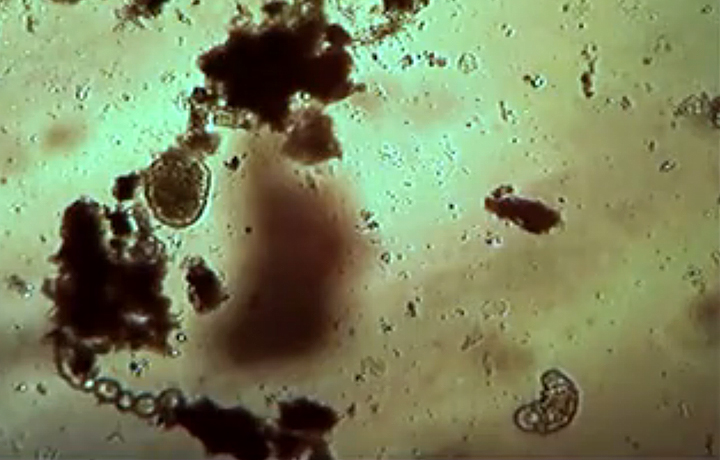
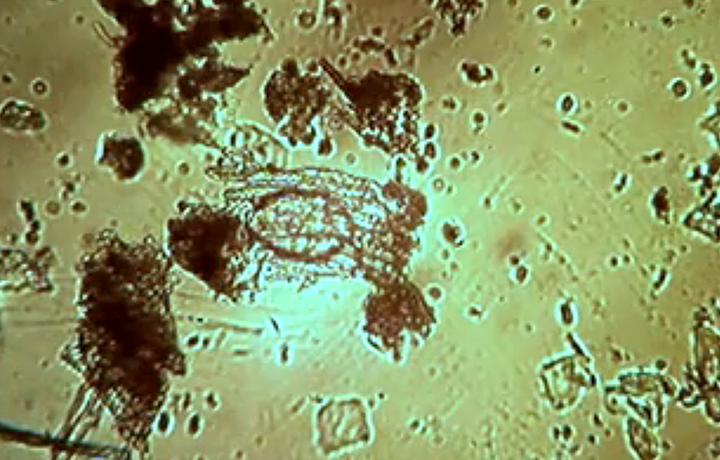
The videos screened connected these themes through their engagement with life and synthetics. Andy Gracie’s 43.25.5.37 (2010) provides a microscope journey of a water droplet teeming with life from a single location.
Andy Gracie, '43.25.5.37', 2010.Footage of organisms taken from the coordinates N 43' 25" W 5' 37" at 100x magnification under a microscope, with soundtrack.
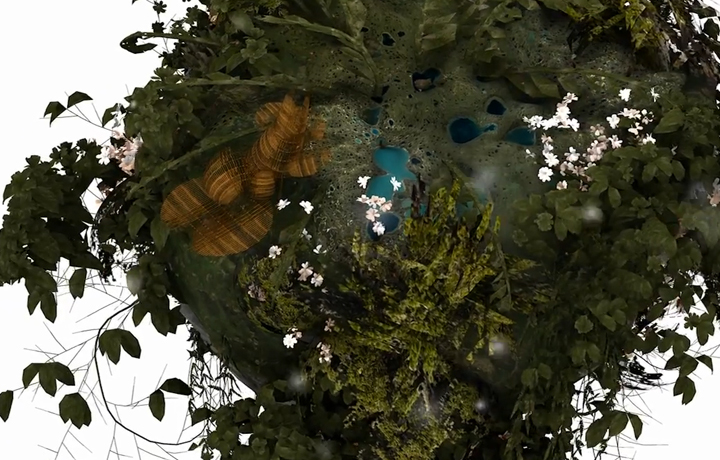
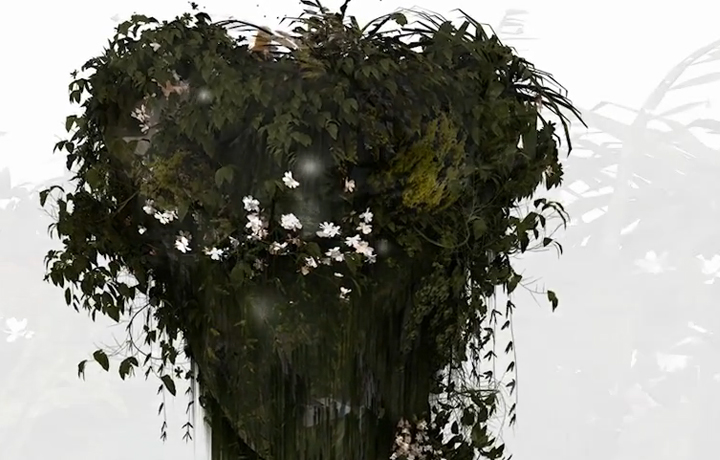
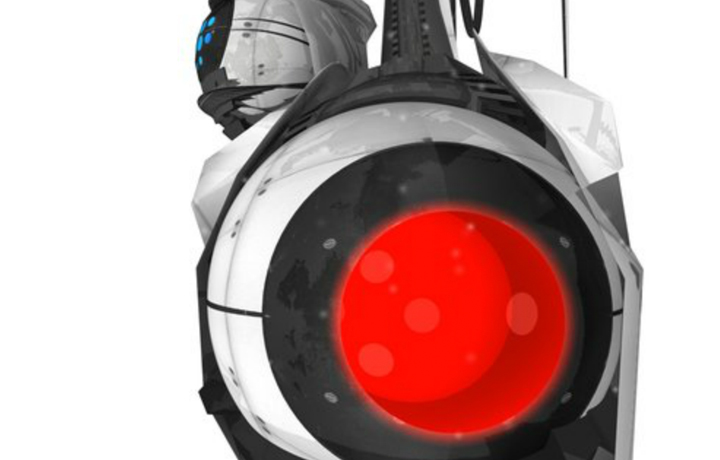
Eric Schockmel takes us to a strangely animated world where machines are in charge of life, constantly engineering it, reversing the notion of Life-Machine.
Eric Schockmel, 'Occupation: Movements II & III', (2010) Deals with an ecological narrative, visually reminiscent of video game design and science-fiction.
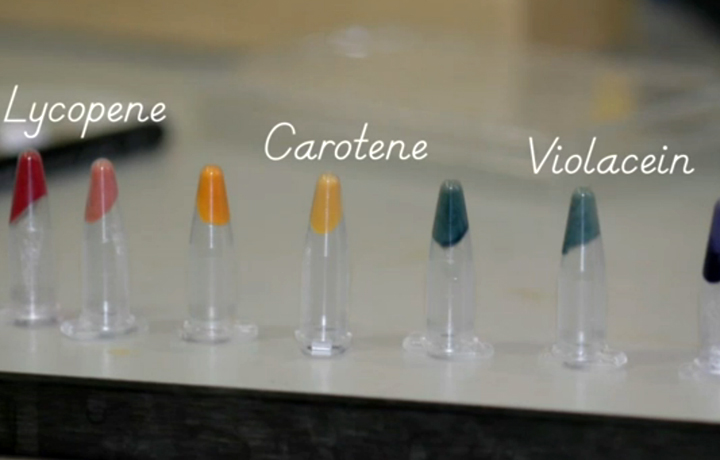
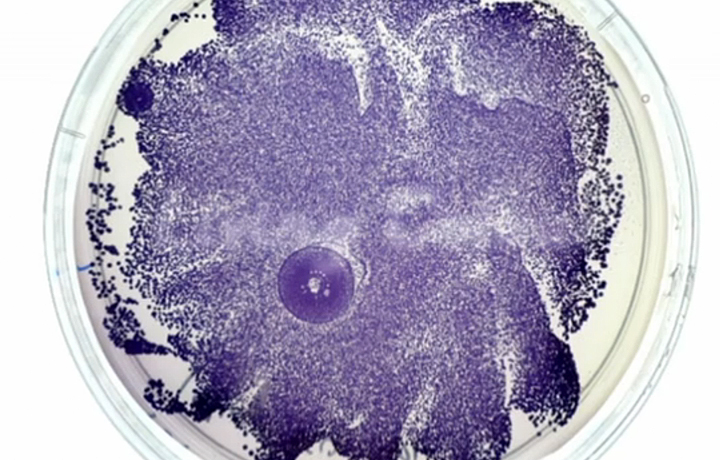
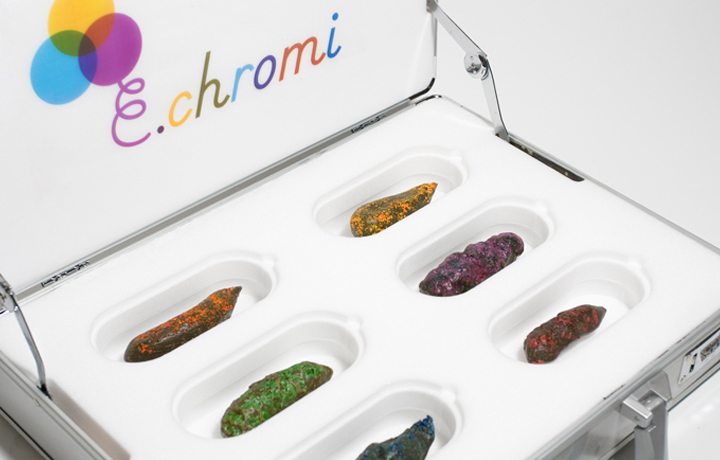
In Alexandra Daisy Ginsberg, James King and Cambridge iGEM 2009’s video E.chromi we see how synthetic biology can use colours to detect substances and speculates on future scenarios.
Alexandra Daisy Ginsberg, James King & the Cambridge University iGEM 2009 team, 'E. chromi', 2009.
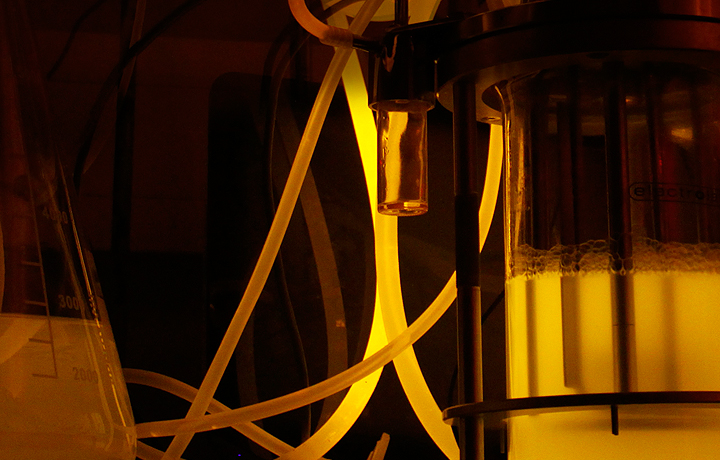
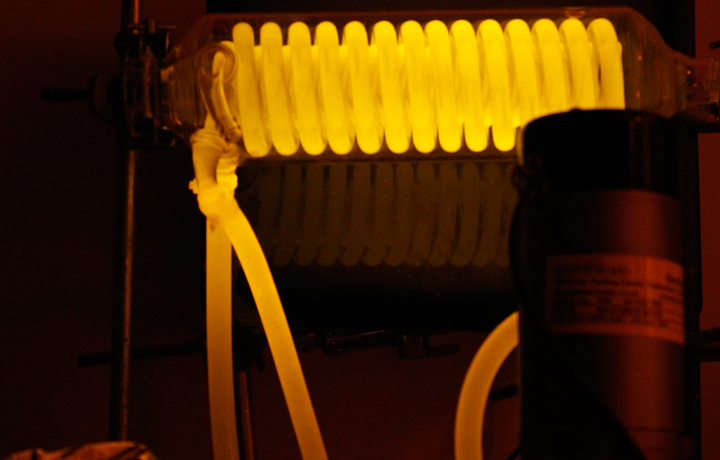
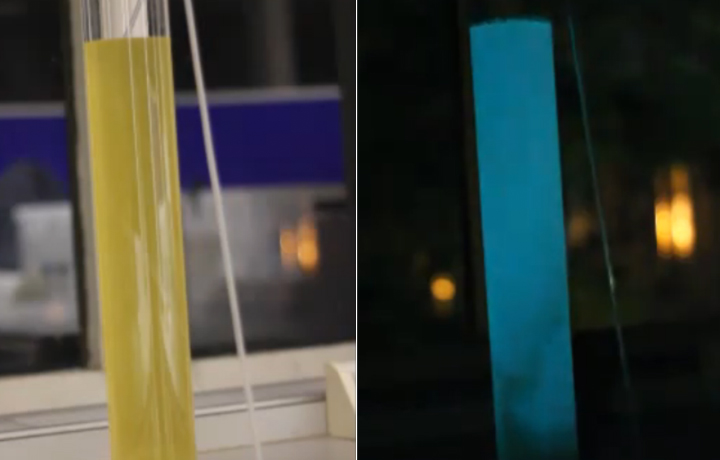
And finally, the Cambridge iGEM 2010 team showed a 'bubble glow lamp' that considers how synthetic biology may soon become part of our appliances.
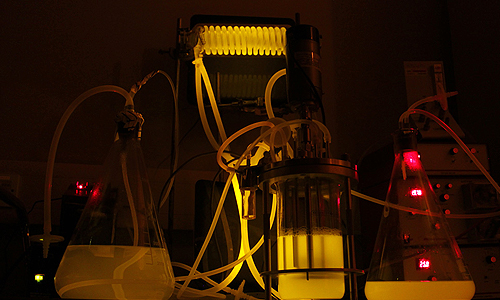
Cambridge iGEM 2010, 'The Bacterial Bubble Lamp', 2010. A bubble lamp made from a culture of genetically engineered E. coli.
Due to GMO (genetically modified organisms) regulations some artworks had to be excluded. However, we are soon expecting to showcase Howard Boland’s (C-LAB) living synthetic biology works, such as the 'stress-o-stat' and 'banana bacteria' displays.
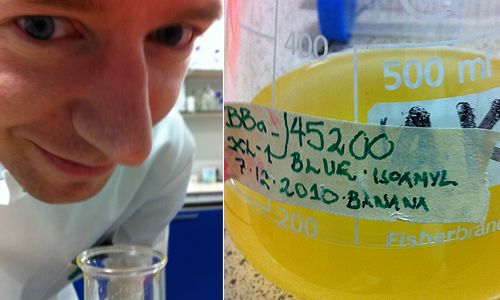
Howard Boland, 'Banana Bacteria', 2011
Dana centre provided a flawless event through excellent management and technical organisation. We thank the over 80 guests for joining us on a brisk autumn night in London and help speculate on synthetic biology and its future.