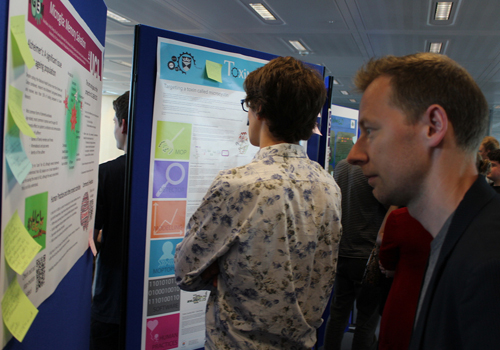
C-LAB's Howard Boland was invited by the Synthetic Biology Society to give a workshop on bio art and synthetic biology art practices for the Young Synthetic Biologist (YSB) conference for UK iGEM teams (the annual international Genetically Engineered Machine competition) at the Wellcome Trust.
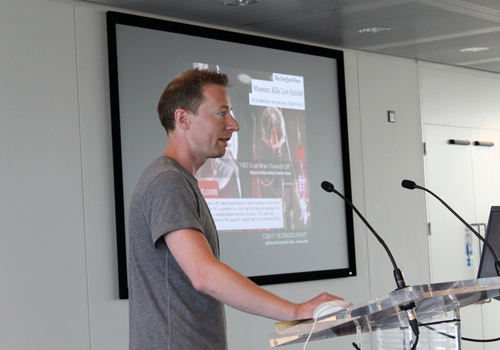
The inaugural YSB conference was attended by students from UK iGEM University teams, High School teams, Entrepreneurial teams, UK Arts & Science Prize and OpenLabTools.
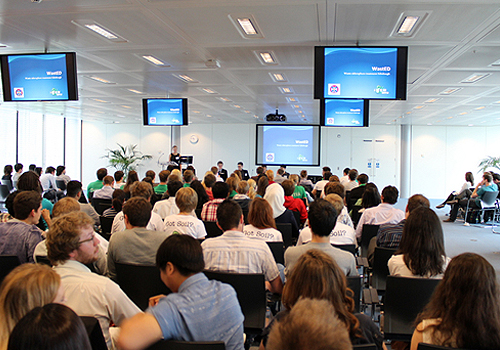
Howard's workshop began with students grouping up to lay down some their preconceived ideas of what bio art might be and citing examples of such practice.
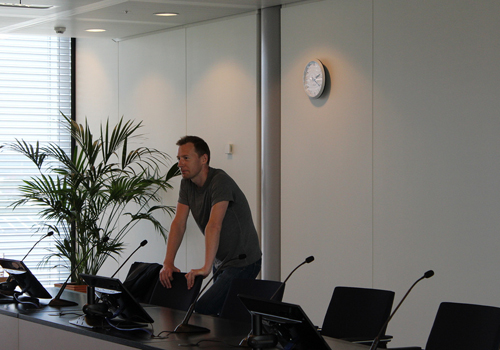
After presenting and discussing their ideas, Howard gave a talk on one way of understanding how bio art operates and its practices, after which students were asked to do a short brain storm for interesting proposals for future bio art ideas that involve synthetic biology.
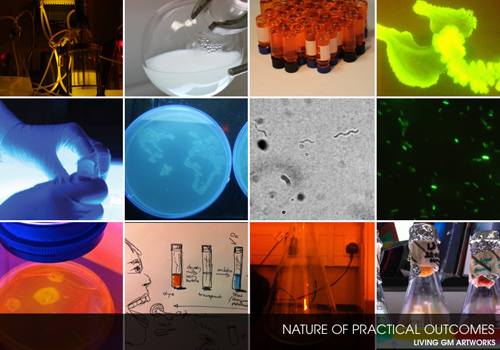
Howard Boland spoke about his research combining innovative approaches in the arts with the biosciences to develop and display living synthetic biology artworks.
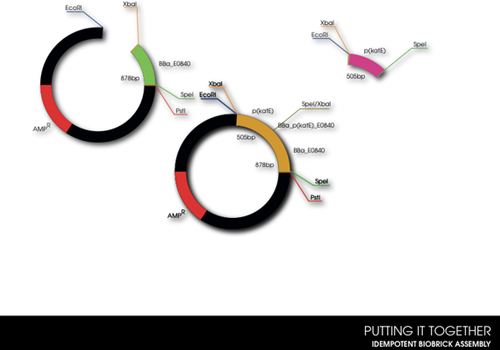
For example in his artwork Stress-o-stat, he developed a genetic construct to visually capture stress in bacteria as light partaking in machine-life ambiguities imposed by the field of synthetic biology in employing a machine to control the genetic program mediated through the living.
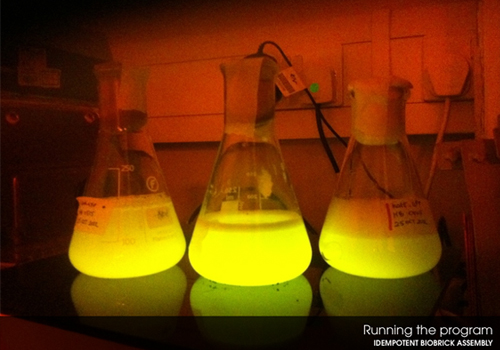
Howard also provided a live demonstration of the unique shimmering effect produced by magnetotactic bacteria in C-LAB's latest project, LIVING MIRROR - a bacterial imaging system developed in collaboration with FOM Institute AMOLF. These bacteria have evolved the ability to biomineralise magnetite allowing them to swim along Earth’s magnetic fields. They produce a stunning shimmering effect in real-time visible to the naked eye. By changing the magnetic field we were seeing bacteria rapidly switching direction in a synchronic rotation causing light to scatter and producing a visible shimmer.
Following the workshop, a Poster Session for UK iGEM team projects were presented. UCL's 2013 fascinating and ambitious project, titled IGEM: Intelligently Genetically Engineered Microglia focuses on tackling Alzheimer’s Disease with synthetic biology.
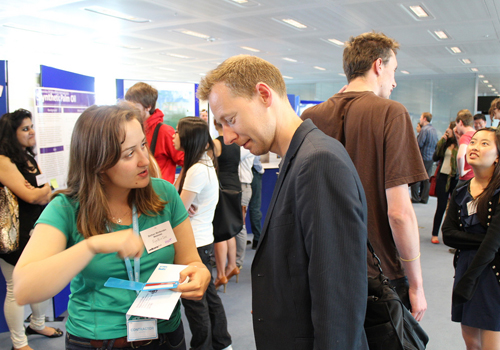
Representatives from the iGEM foundation (previously MIT) were also present and announced that next year's competition will be expanded to include a DIY strand with the aims to initiate an art and design strand the subsequent year (2015). We are very much looking forward to seeing these initiatives materialise.
Photos: Synthetic Biology Society