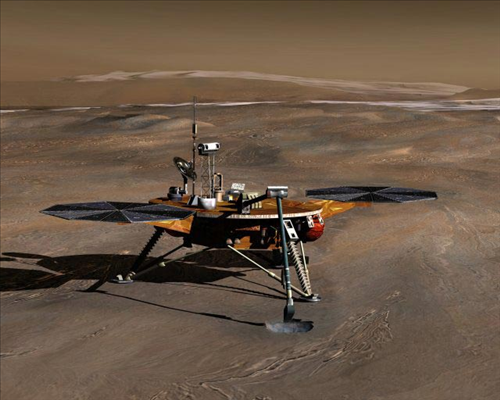
Named for the mythological bird that rose out of the fire to be reborn, Phoenix the new Lander for the next Mars mission to launch in 2007, was aptly named.
The craft was originally part of the 2001 Mars Surveyor Program but was placed in storage after the loss of Surveyor. Renamed Phoenix the caft is now being prepared for flight.
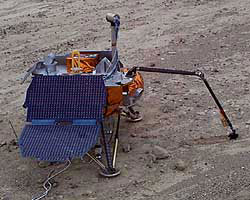
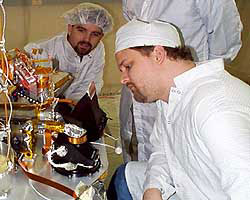
At left the Phoenix Lander practices robotic arm control at test site in Death Valley. On the right scientists observe Phoenix in the laboratory testing stage
Phoenix is described as a low-cost project with the mission to study the planet's ice cap. Landing near the northern polar region, a unique camera system will photograph the landing site just before it touches down in late 2008.
The Phoenix Lander's robotic arm will dig down over 3 feet into the red planet's subsurface to collect ice and soil samples while a camera mounted on the arm monitors the action. It will land in an area that has the possibility of 80 percent water-ice by volume within one foot of the surface.
Phoenix will have the ability to examine materials 1000 times less than the width of a human hair.
The immediate goals of the Phoenix mission are to study the geologic history of water, and to search for evidence that Mars may have sustained life. Continued research will be done to determine whether dormant organisms could come back to life.