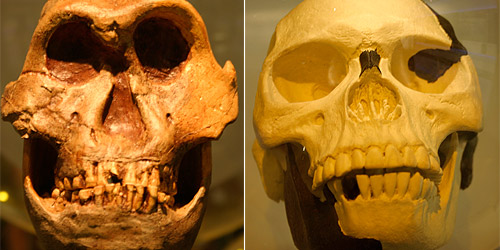
With a total of over 500 humanoids the caves of Sterkfontain was nominated to become a World Heritage Site in 2000. The caves where initally discovered by Italian miners looking for limestone but became aware of fossile hidden in the stones and thus brought this to the attention of paleo-antorpologists.
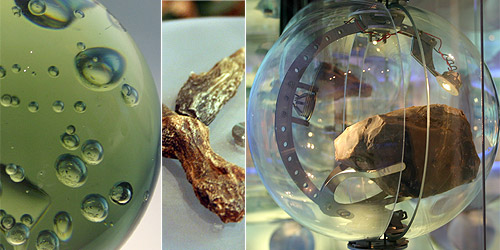
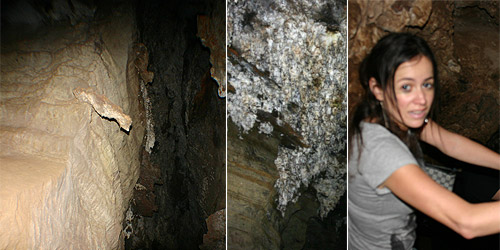
The site is still an active excavation site but the small group of archeologists seemed to have wandered off to lunch during our visit. Making our way down the limestone cave is treacherous spectacle. Over time water trickling down cracks react with the soil by taking up carbon dioxide and in so becomes acidic, passing further through limestone which is slowly dissolved, calcium is carried with the water and release once water enters more air filled parts of the cave. This is process results in the many formations that can be observed in a cave such as calcite (CaCO3) crystals. Fossiles are normally not easily preserved over time, but these happen to be ideal conditions and bones and teeths can be found embedded in the rocks.