(Un)Inhabitable? - Art of Extreme Environments
(Un)Inhabitable? - Art of Extreme Environments is the 10th anniversary of the @rt outsiders festival curated by Jean-Luc Soret and Annick Bureaud. The 2009 exhibition looks at how artists negotiate the meaning of ‘inhabiting the extreme’ and how also ‘the extreme inhabits us’.
Howard Boland and Laura Cinti
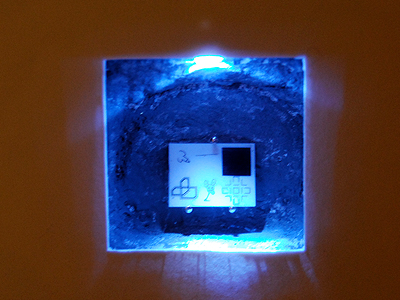
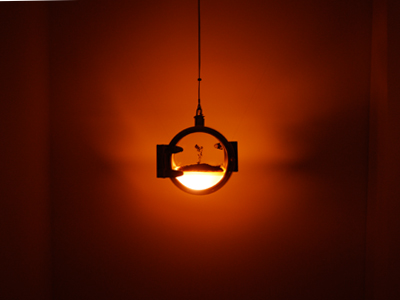
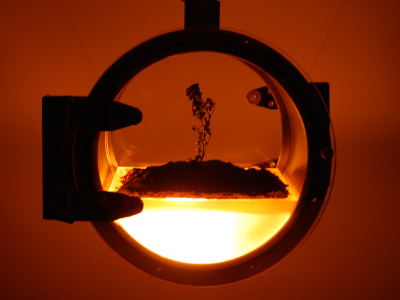
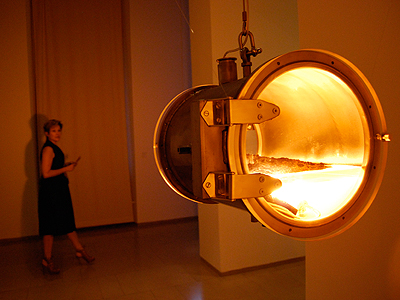
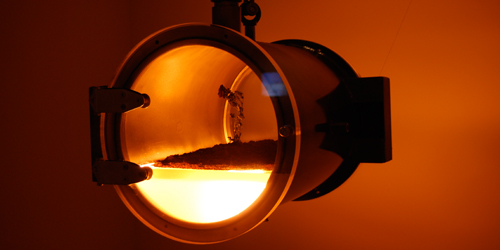
Howard Boland and Laura Cinti (c-lab) presented a new addition of their work The Martian Rose, supported by the @rts Outsiders, by conducting an experiment/performance leading up to the exhibition. The work bring us in direct contact with the Martian Environment by exposing roses to the harsh conditions of Mars through the use of a planetary simulation chamber. It draws on our strong symbolic connection with roses both as an exchange symbol and its fragility as a flower. By using living roses, experimental outcomes contrasts with the images of rovers and Martian desert landscape that dominates the visual culture of Mars. The exhibition features a probe like construction (a floating grave) with its own light and the resulting rose from the experiment planted in a mound of 'Martian soil' (Iron Oxide III).
Shiro Matsui’s
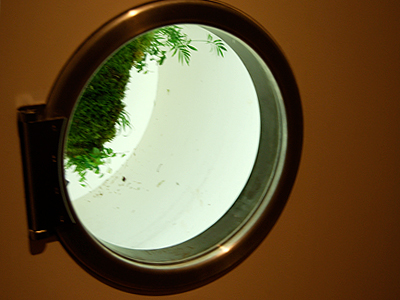
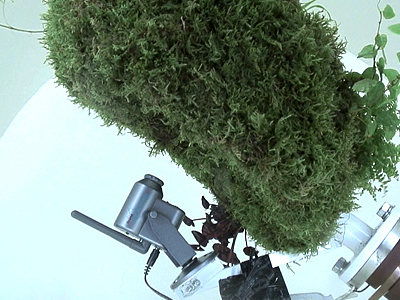
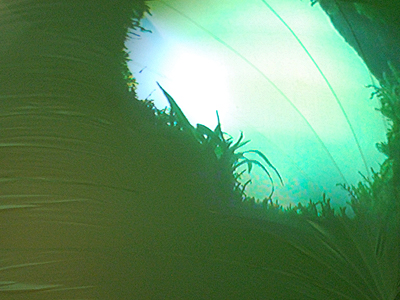
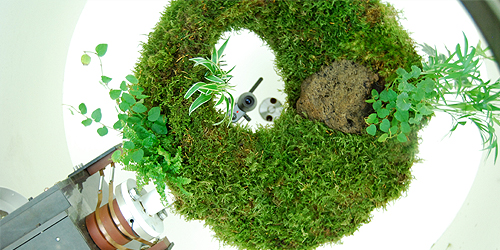
Also using plants in a space setting is Shiro Matsui’s EP04 – Dewey’s Forest - an experimental project to create a zero-gravity garden. The installation is designed for the International Space Station (ISS) and weightlessness with the intention of taking part in the Japanese space agencies art program. In the installation the garden is mounted on rotating machine seen through a circular window. The audience can see the view from the garden on the other side of the wall through a camera and video projection. The launch is planned for September 2009.
Hu Jie Ming
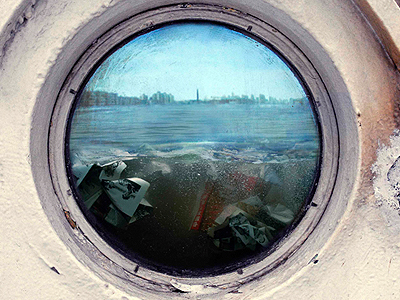
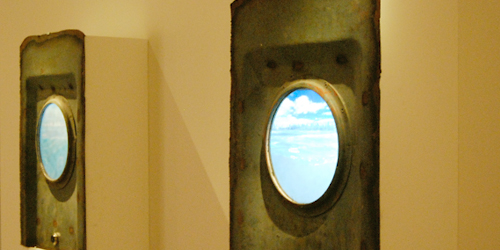
Hu Jie Ming showed his work Altitude Zero, an interactive video installation with cabin-like screens and sensors. The ocean is seen through a ship’s porthole that becomes polluted by our presence or movement.
Many of the artists involved had spent time in Antarctica and the works carried reflections of the landscape, objects, habitation and policies that surrounds this extreme environment.
Andrea Polli’s
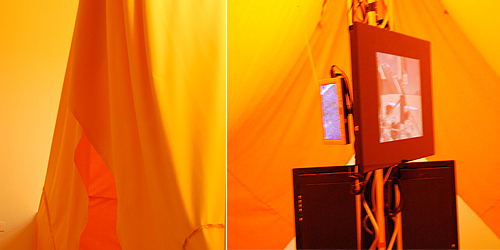
Andrea Polli’s Sonic Antarctica consists of interviews with scientists and field recordings of the environment. In the installation a yellow orange tent is lit producing a reminiscent light to that of the Antarctica summer. Inside the tent, a soundscape combining interviews and the field recordings connects data to the environment.
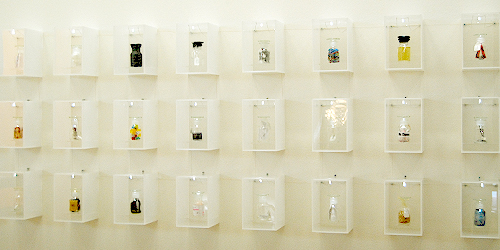
Anne Brodie's
Anne Brodie's Antarctica, a choice? Rothera Collection, consists of a series of glass jars with objects that represents the feelings and identities of the British Antarctic base inhabitants with whom she lived and worked with for 3 months.
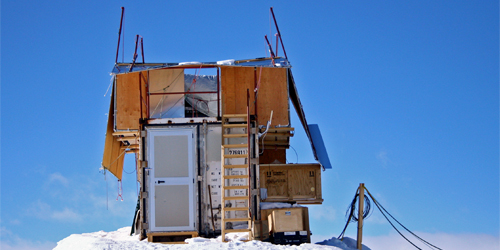
Catherine Rannou's
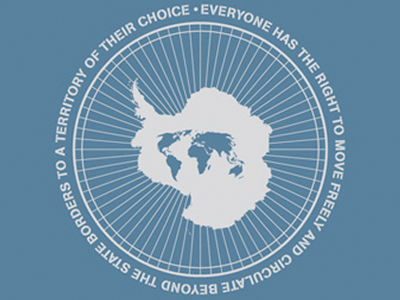
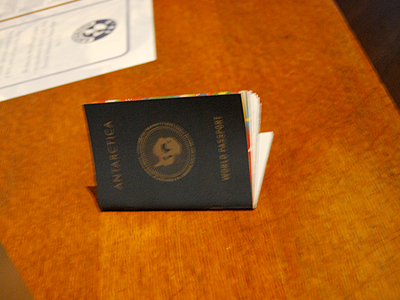
Building on her experience travelling in Antarctica, Catherine Rannou's, Colonisation 2041, is an amalgamation of materials that reflects on both the occupation of the territory by scientists, the policy and management. Rannou's work consists of images, video recordings, animations and online documentation.
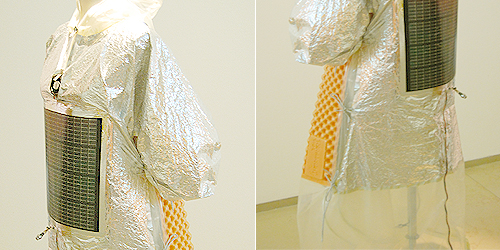
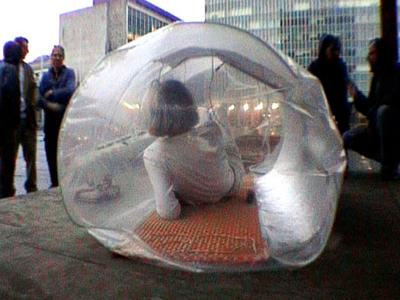
In Ana Rewakowicz SleepingBagDress an inflatable transparent Kimono dress powered by sun panels is transformed into a tent-like sleeping bag. Three video screens show her performances where the audience are invited into the dress/tent, the intimate conversations from the inside and the reactions from the outside. The work plays on the concepts of the inside/outside.
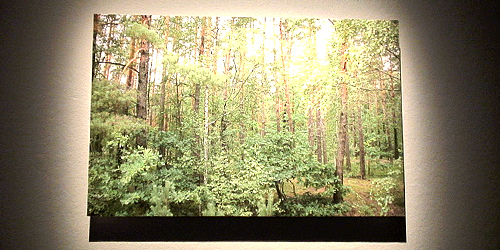
Peter Cusak
Sounds from a Dangerous Places by Peter Cusak is a mixture of recordings taken from various places around Chernobyl two decades after the disaster. Sounds of radiometers, songs of poems and twittering birds are combined with photos taken in the area. The installation uses a series of spotlights to connect images with sounds.