c-lab
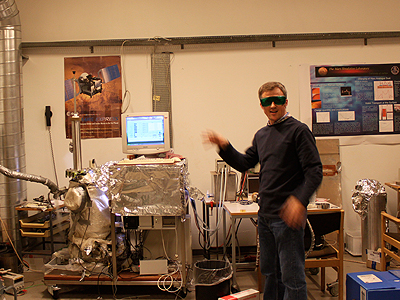
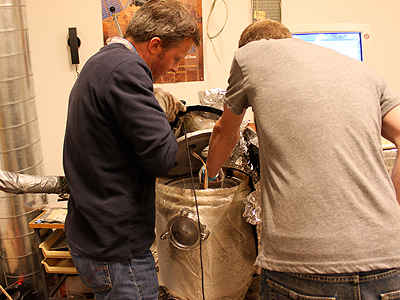
As part of the @rt outsiders festival, c-lab developed a new addition to the work The Martian Rose with the help of the Mars Simulation Laboratory at Aarhus University (Denmark). With us to conduct the experiment was Dr Jon Merrison.
The abundance of images sent back from Mars via rovers, landers and orbiters, or those captured by telescopes on Earth and in space, construct a landscape often riddled with abstract data or textures devoid of life. The Martian Rose explores what happens to life in the extreme environment of Mars. In the experiment we exposed a series of roses to Martian conditions using a planetary simulation chamber specifically built for Mars to draw a new image of Mars by connnecting it to one of our most symbolic and poetic plants, the rose.
The abundance of images sent back from Mars via rovers, landers and orbiters, or those captured by telescopes on Earth and in space, construct a landscape often riddled with abstract data or textures devoid of life. The Martian Rose explores what happens to life in the extreme environment of Mars. In the experiment we exposed a series of roses to Martian conditions using a planetary simulation chamber specifically built for Mars to draw a new image of Mars by connnecting it to one of our most symbolic and poetic plants, the rose.
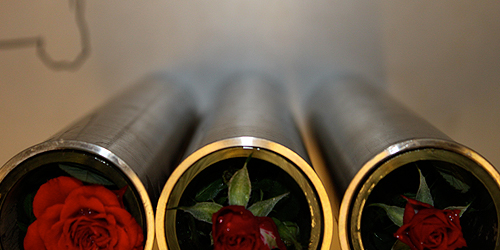
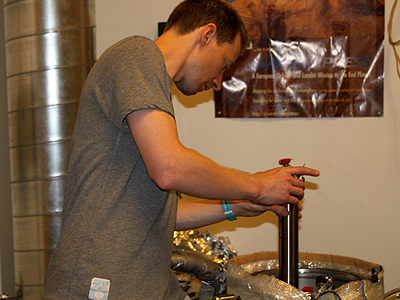
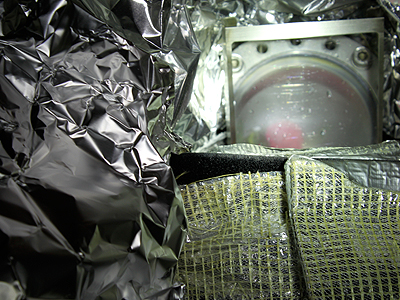
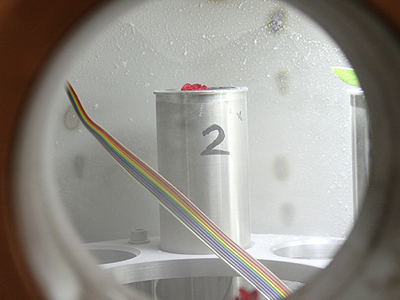
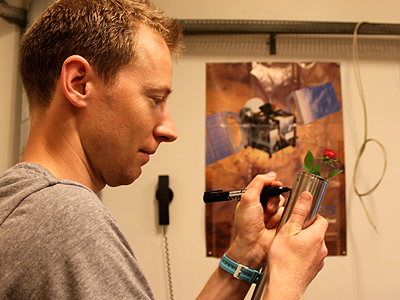
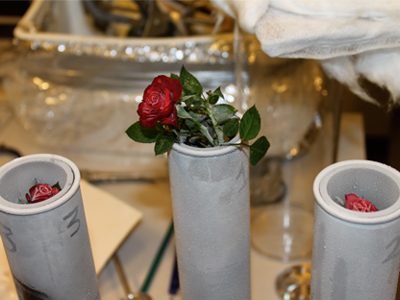
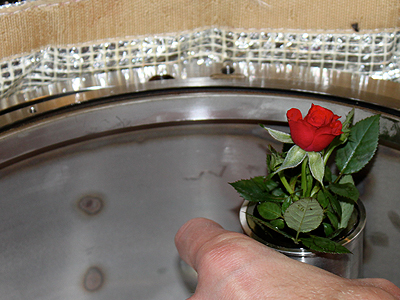
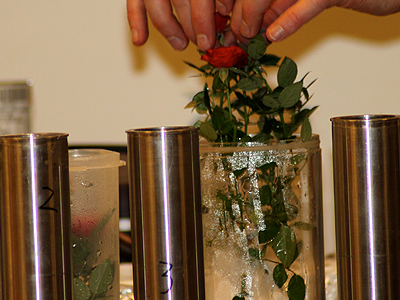
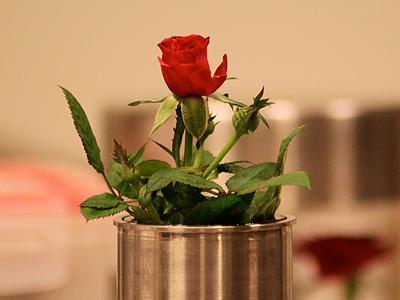
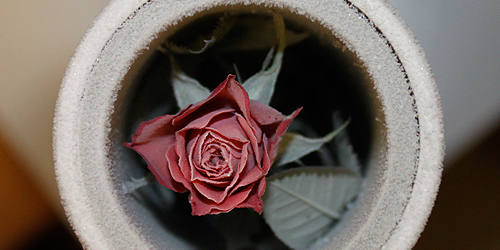
In order to prepare the roses for their journey, the roses were taken out of their transport containers and placed into metallic cylindrical tubes - each fitting into a position on a computerized carousel inside the biochamber.
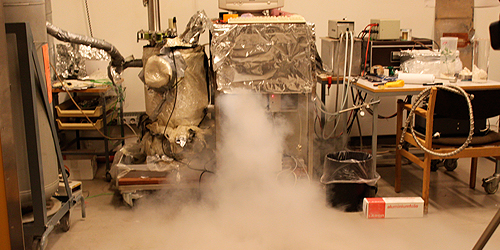
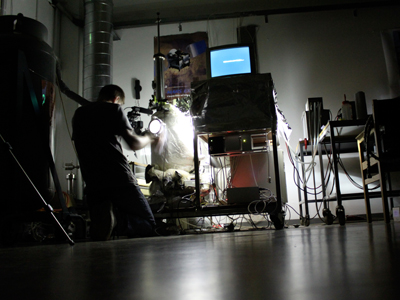
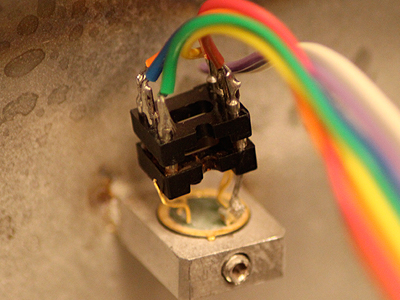
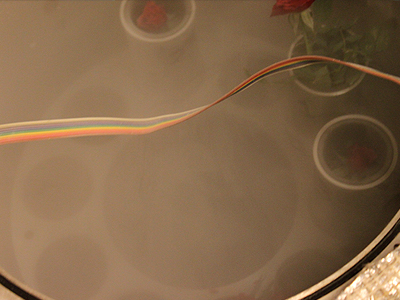
The biochamber simulates most of the extreme conditions found on Mars. The low pressure, the hard penetrating UV-light and the chilling temperature. Using liquid nitrogen, the walls of the chamber are quickly cooled and a computer regulates it at a constant level by adding liquid and releasing bursts of cold steam sometimes covering the whole floor as a low creeping cloud.
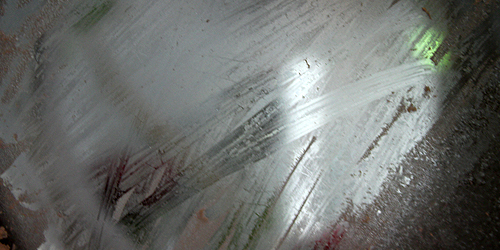
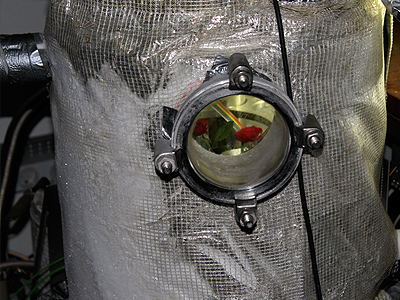
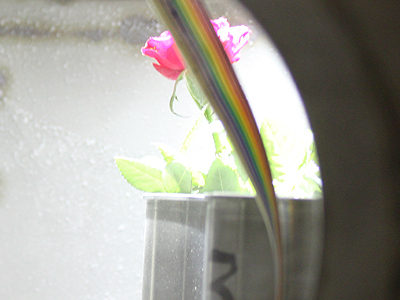
Through the chamber window we find a frost-covered glass with a thick layer of ice surrounding the sides.
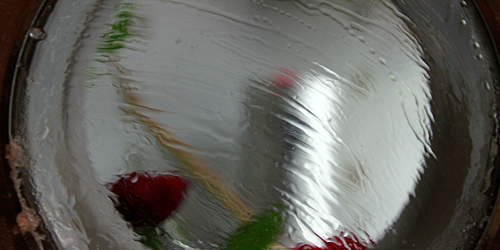
It is impossible to look through the frost, but with a moist cloth of ethanol we can clear the frost for just a few seconds.
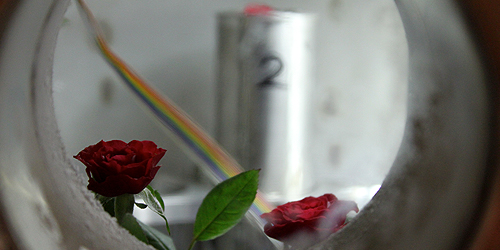
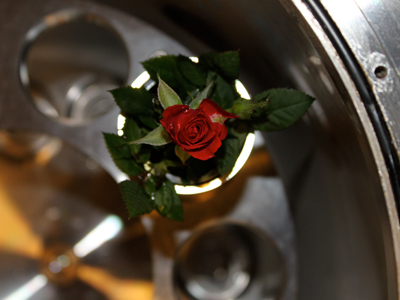
We swab the window quickly, and use a dry cloth to remove the alcohol – and there it is – the crisp cold view of roses as they experience the Martian environment. In the corner we see the UV-light as it shines directly onto the rose in tube number 4. It is a magnificent spectacle of space and mars captured and recreated here on earth.
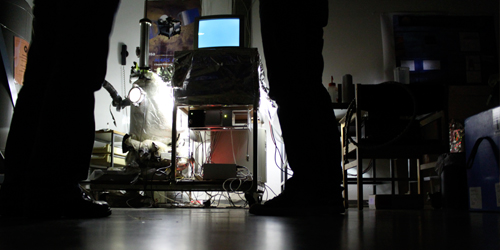
We place a tape over the automatic light system and wait. After a few minutes, the light in the lab goes out, and we are left with only the UV-light pouring out of the chamber windows. The window is all of a sudden transformed into a viewport to another space, to Mars filled with spectacular roses.
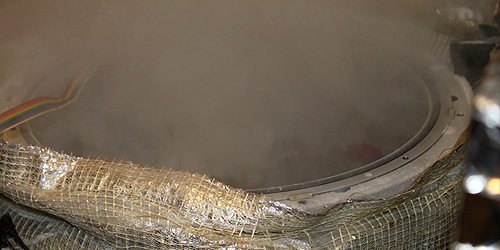
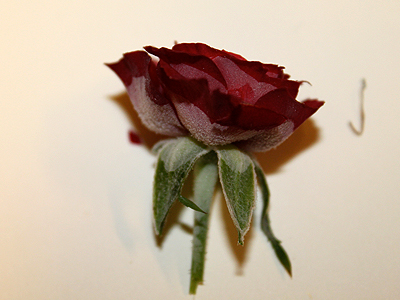
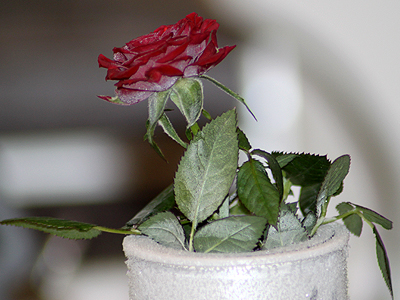
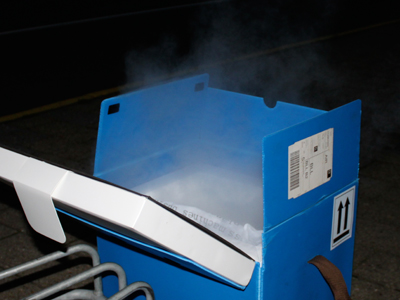
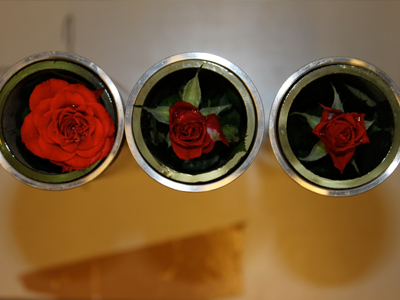
Close to 7pm, we finally take out the other roses. The chamber is decompressed, and the liquid nitrogen supply switched off. As we remove the head, the chilling atmosphere of our simulated Mars meets the pleasant Earthly atmosphere creating a slow moving cloud around the chamber. Through the cloud the roses appear, dark red – frozen, yet all but two intact in their shape.
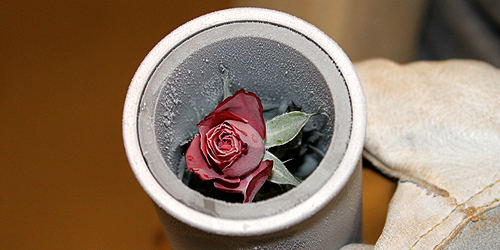
Looking into the tubes, the roses look like a painting far removed from the landscape on earth. We let them thaw, and then place them in containers and into dry ice.
Acknowledgements
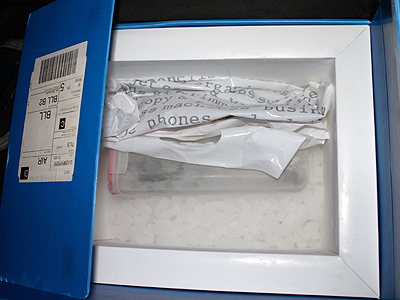
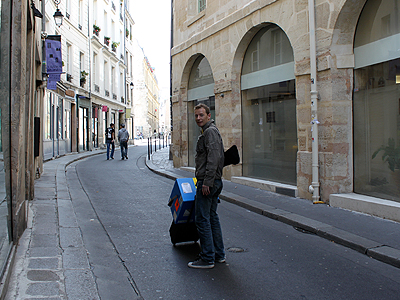
We pack up, bid our warmest goodbye, and leave the University in a taxi on our way to the exhibition in Paris.
Acknowledgements
The experiment was conducted at The Mars Simulation Laboratory, Aarhus University, Denmark. We would like to express our sincerest gratitude to Dr Jon Merrison. The project has been supported by a grant from Office of Contemporary Art Norway. The new edition of the work has been supported by the @rt Outsiders Festival 2009.