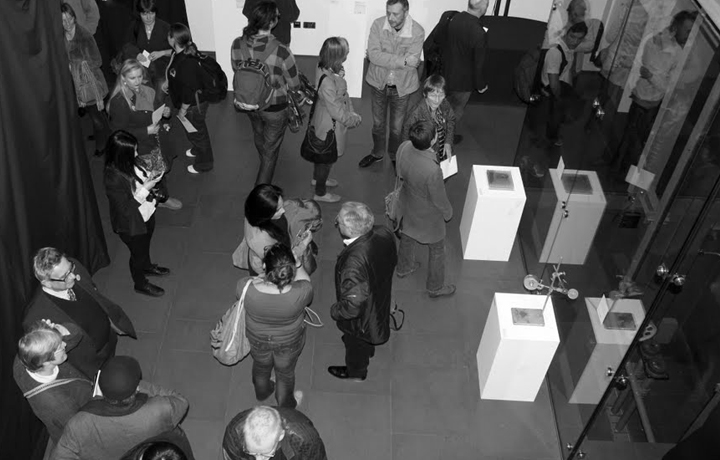
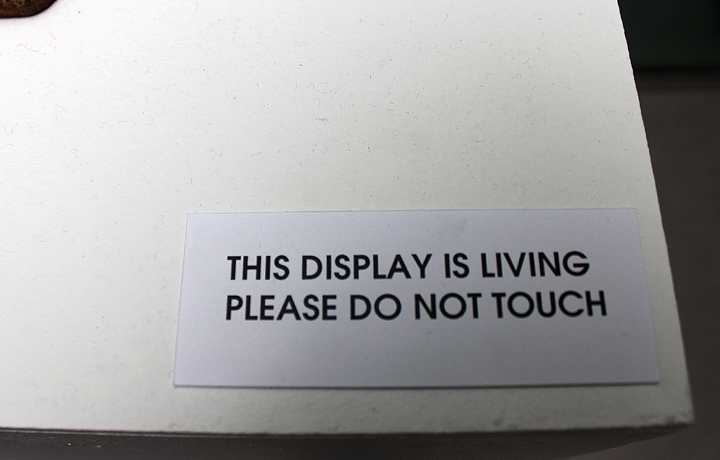
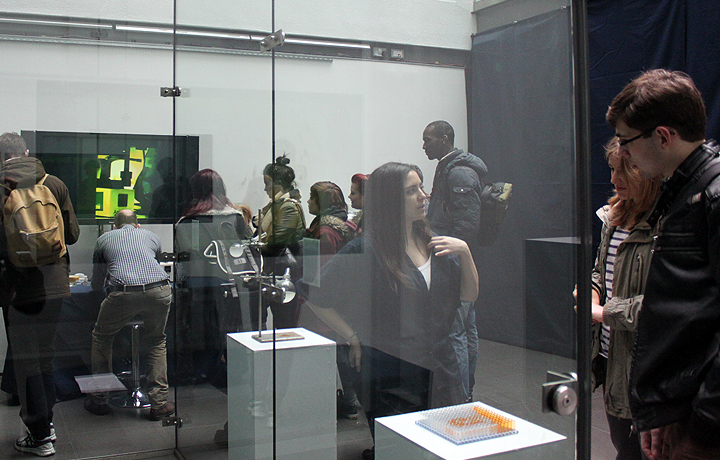
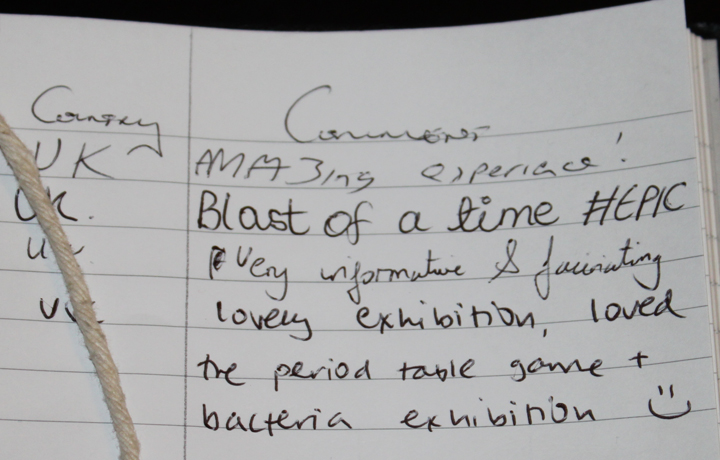
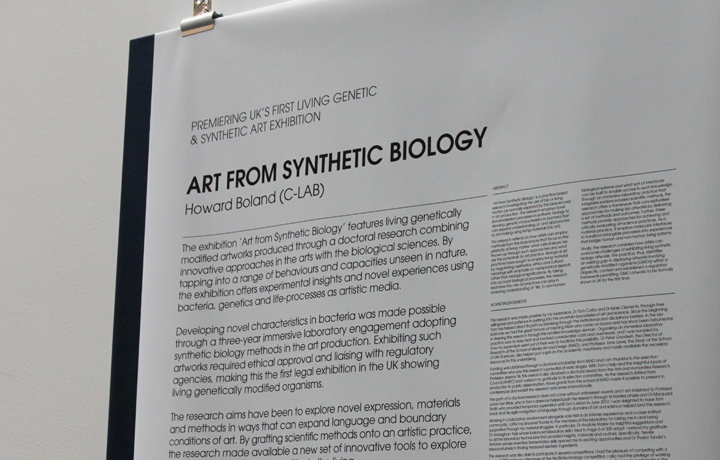
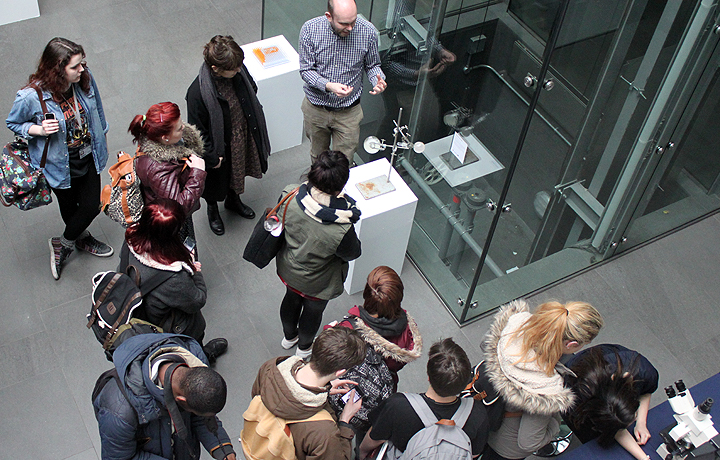
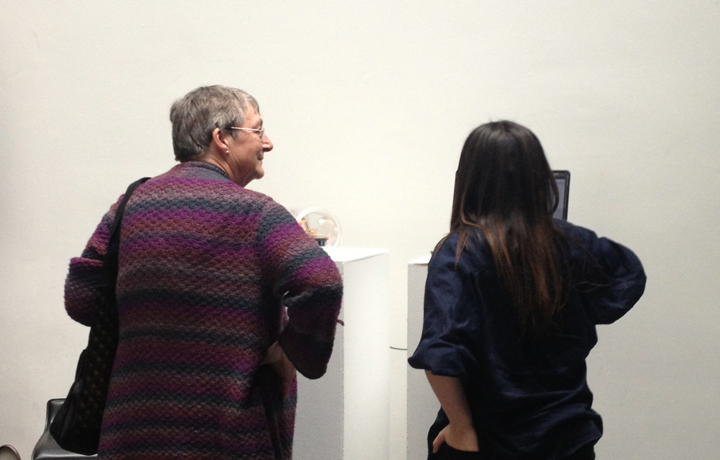
Art from Synthetic Biology is the cumulation of a doctoral research using synthetic biology and genetics in art production. As the first public art exhibition featuring living genetically modified microorganisms in the UK, it represents a milestone in bio art practices and highlights the challenges of putting such matter on display. The exhibition was hosted at the Royal Institution of Great Britain with a special evening event held on the 10th of April 2013.
Howard Boland spent three years immersed in an independent laboratory practice adopting scientific tools, protocols and methods of synthetic biology. Seven selected works from various stages of his research were shown and highlighted how the practice developed towards an increasingly complex relationship with the material (e.g. use of genetics and biological processes). The exhibition was therefore able to span beyond metaphorical use of genetics, taking the audience into the realm where the artist creates new behaviour in microogranisms and allows this to be experienced.
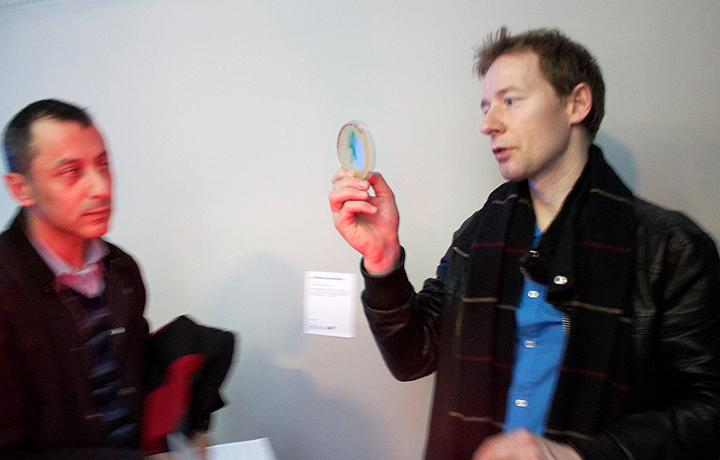
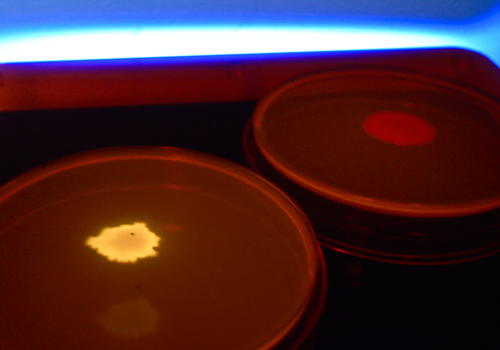
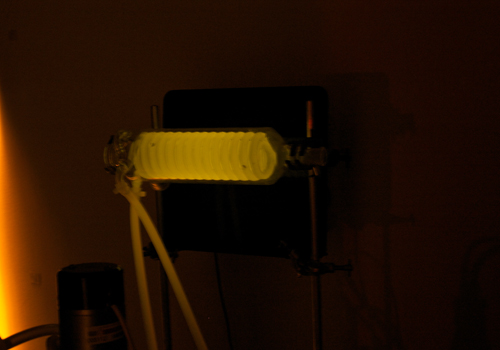
Key works included stress-responsive bacteria engineered to produce light emitting proteins during (oxidative) stress. Seen as single colonies expanding into formidable sizes on large petri dishes, the two works, katE and katE-Red visualised stress using green and red fluorescent proteins where the inner and outer areas become subject to intensive stress as colonies swarm outwards in search for food. Both works employ the use of a genetic switch involved in stress-response to activate light emitting proteins - in doing so the works allows us to visualise an otherwise invisible process.
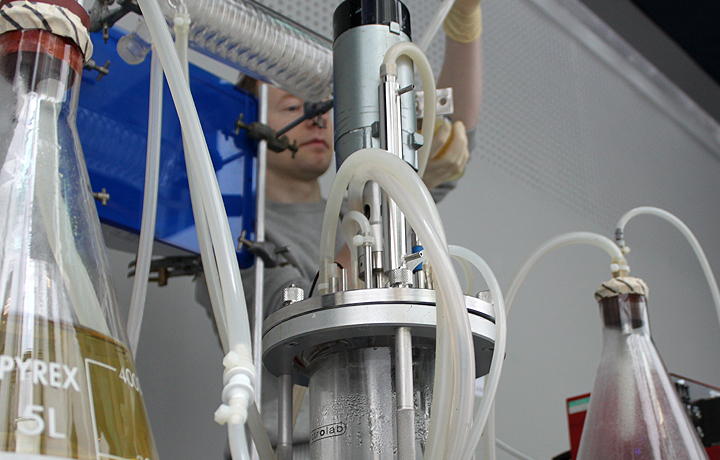
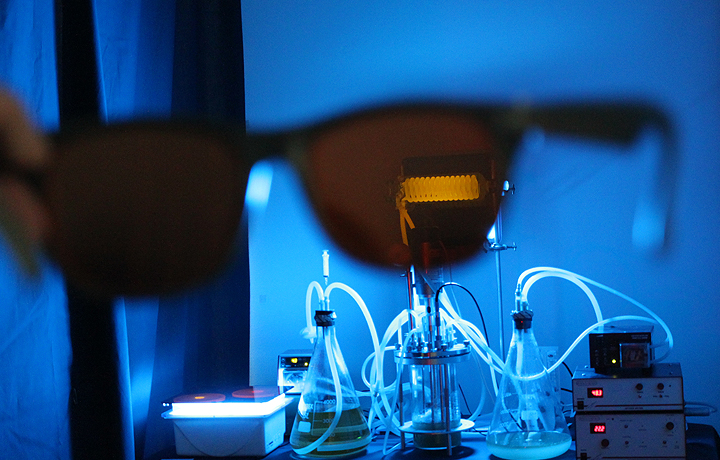
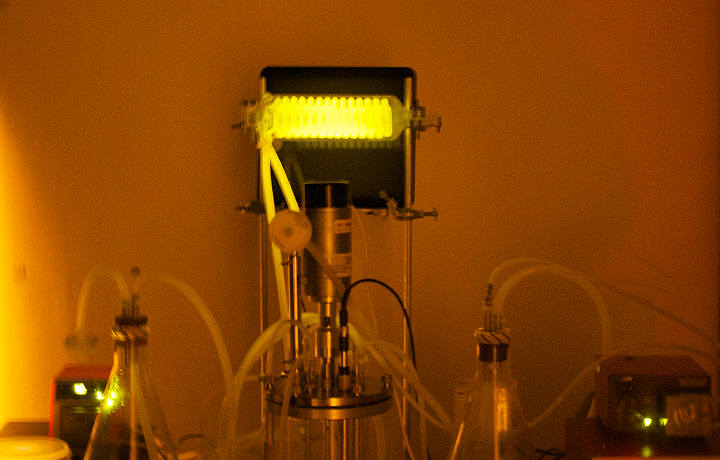
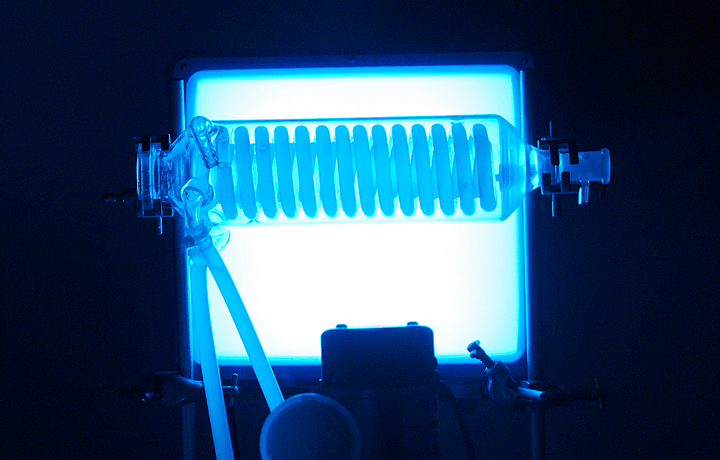
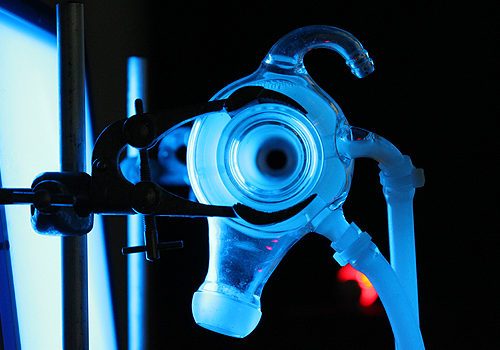
Stress-o-stat - a liquid setup that captures stress in bacteria as light.
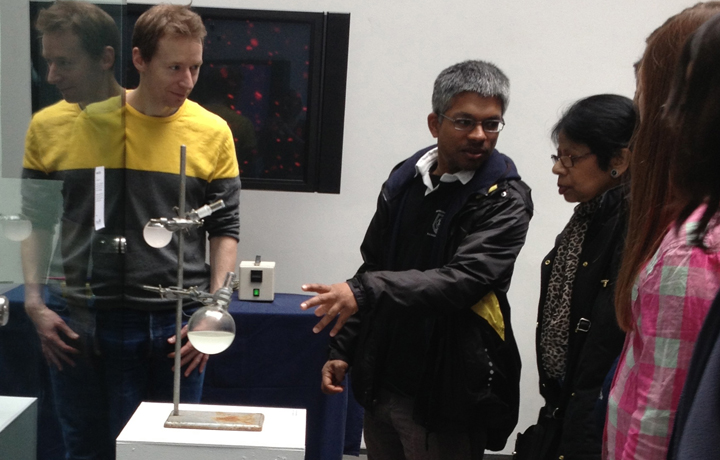
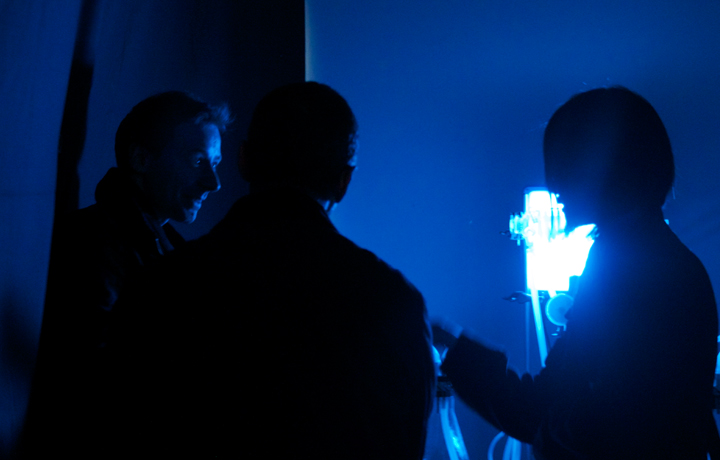
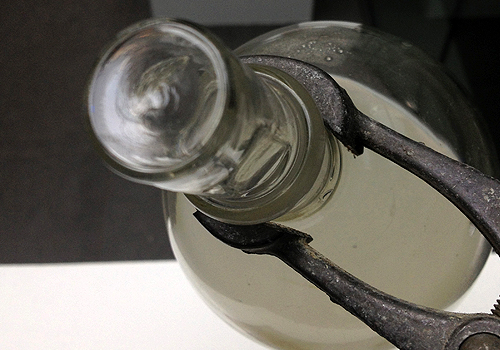
Building on the genetic stress sensing device katE, the large-scale liquid setup Stress-o-stat enabled stress to be controlled and captured as light in bacteria using a fermentation setup. By keeping the population constant, light could be made brighter by starving the bacteria.
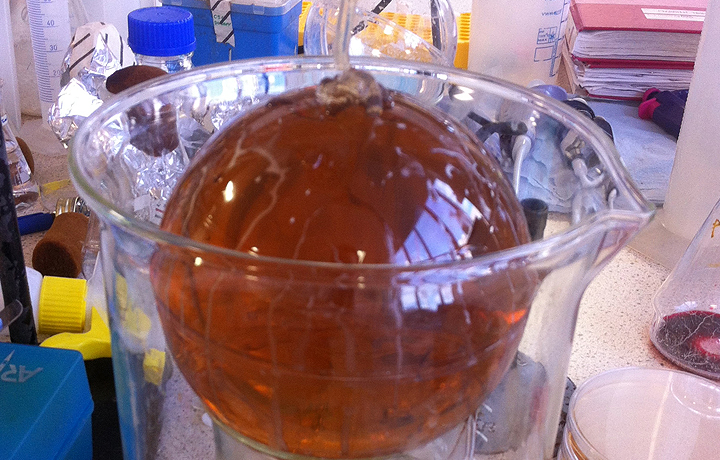
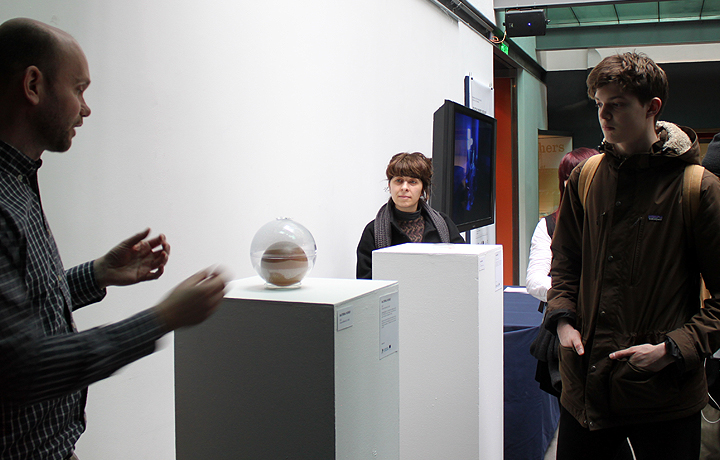
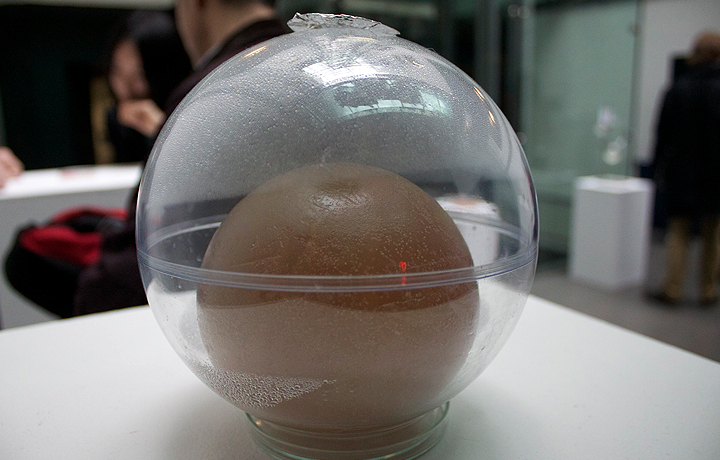
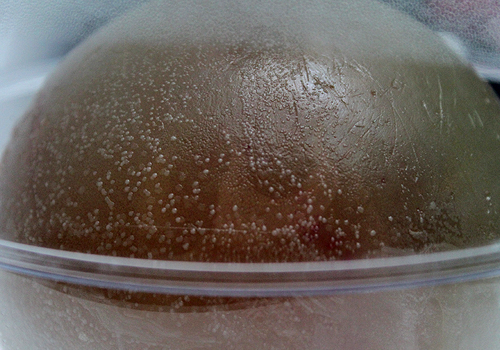
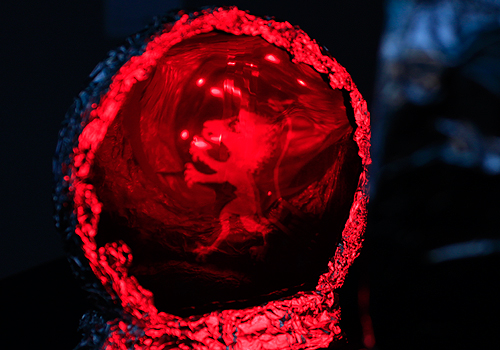
Earlier stages of the research involved conceptual methods, Bacterial World showed a cannon-sized agar ball colonised by red and green fluorescent bacteria. The critical question posed is whether the sciences, in alleviating ‘an ever-growing population’, adds to the overpopulation problem? The world inoculated with 'genetic workhorses' (E. coli) of the sciences was done based on human populated areas of the world map and provides a living display that visualises uncurbed growth.
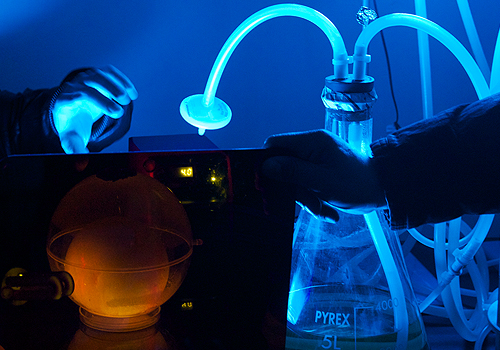
At times audience were invited to see the map using a fluorescent lighting system that dramatically lights up colonies and also showed the potential of using bacteria as a living conceptual data map.
Sugar Rush, a living visualisation system exploring E. coli's sugar preference.
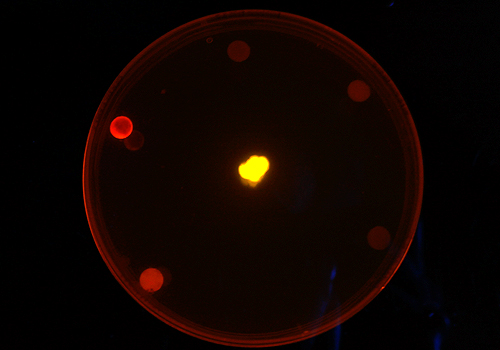
Reflective of the earlier period in the lab and excitement offered by this material, the work Sugar Rush explores how bacteria can sense food gradient. In the display a single colony of fluorescing E. coli was inoculated in the centre of a petri dish and surrounded by five essential sugars (colour coded to help visualise the gradient).
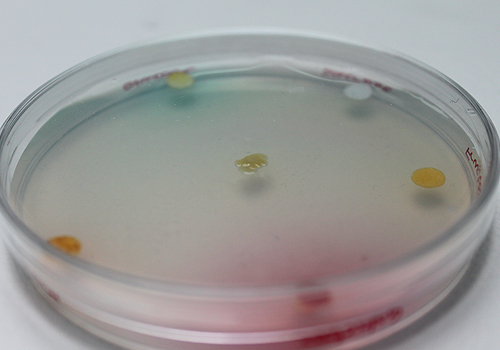
The work provides a process based visualisation of sugar preference in bacteria (E. coli) and can be seen as a movement by the entire colony towards its sugar of liking. The display could also be explored under fluorescent light conditions.
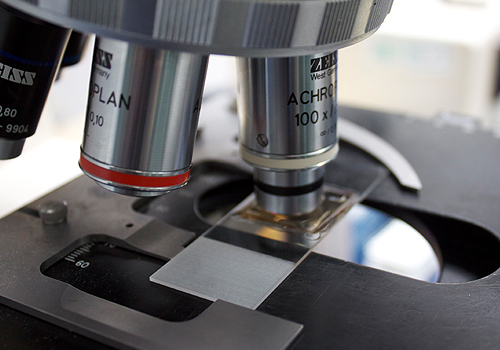
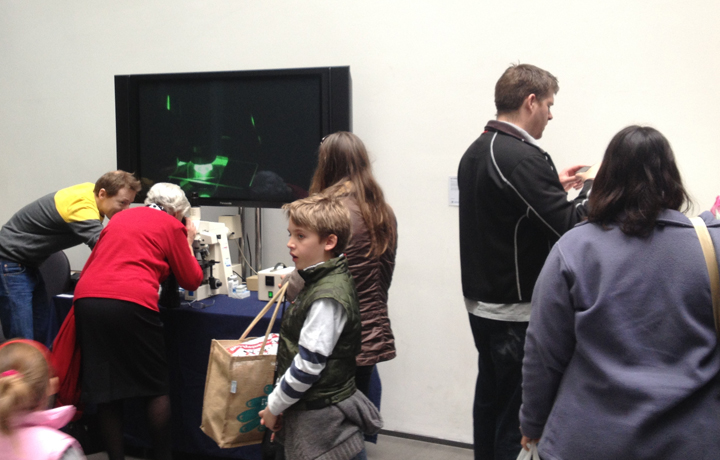
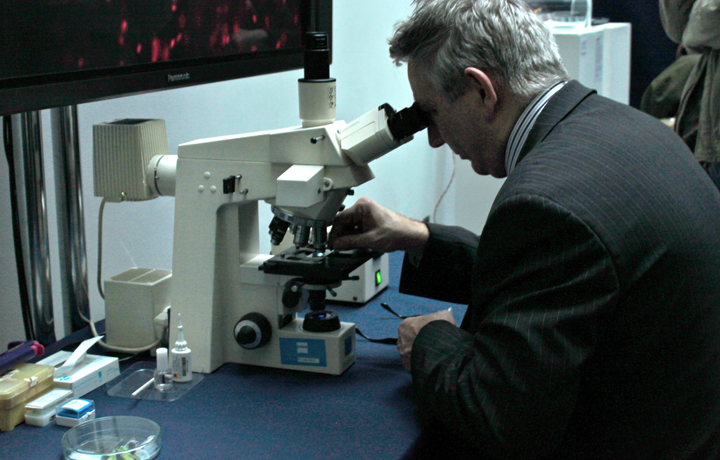
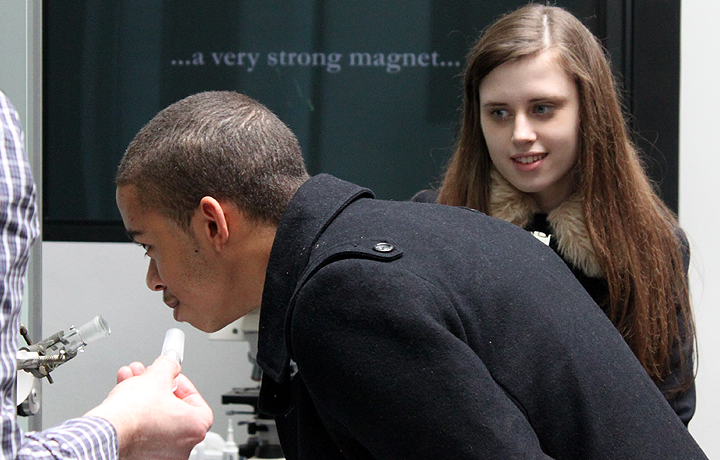
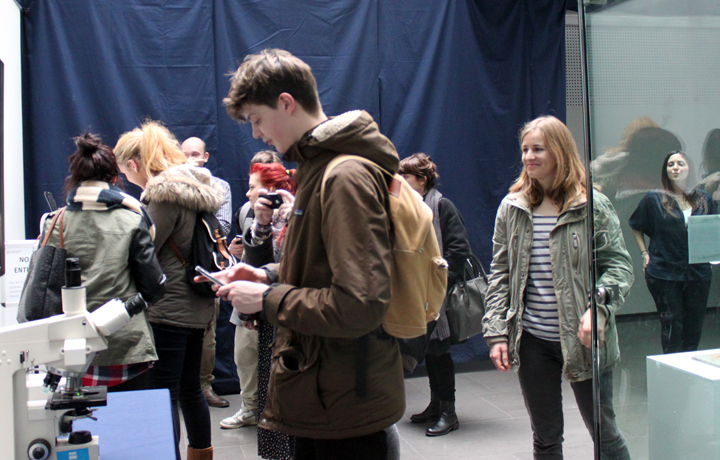
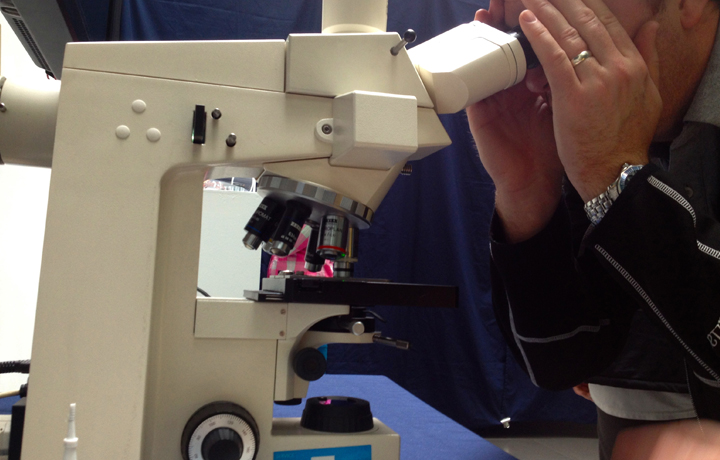
Bacteria Compass invited audience for the first time to interact with individual bacteria at x1000 magnification. Using a fluorescent microscope, magnetic nanoparticles and bacteria expressing red fluorescent proteins, a small hand-held magnet was moved around the slide enabling the audience to rotate individual bacteria.

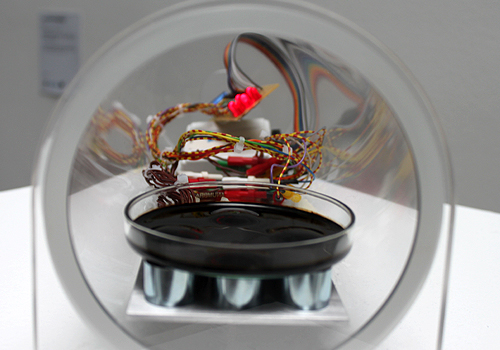
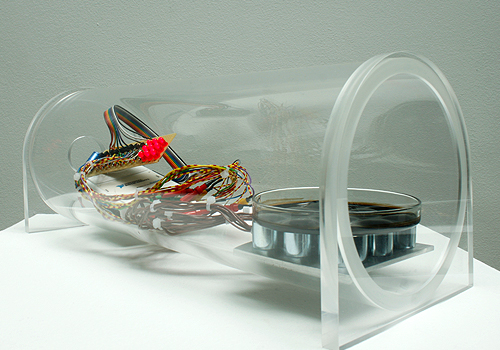
Living Mirror - Prototype 3x3
Living Mirror, a current work in development, aims to produce portrait images in liquid media using magnetic bacteria. The display featured a programmable prototype able to produce dancing patterns in magnetic fluid using electromagnets. Audience were invited to interact and develop their own patterns and explore potentials in producing 'fleshy' images.
Bacterial Light Sensor, showed a developing (but partly failed) work where bacteria effectively become a photographic surface. The work builds on several efforts of introducing light-sensing capabilities in E. coli using a chimeric protein construction. In the work, a light shines through a silhouette onto a lawn of bacteria to instil a pattern. Curiously in the work, the genetics at play is a cross-wiring of osmosis (sensing salts concentration) and light-sensing.
The exhibition offered an opportunity for audience to experience the transgenic olfactory display Banana Bacteria. The work uses an existing genetic construct derived from yeast, making bacteria capable of converting isoamyl alcohol into isoamyl acetate - or banana oil. Participants were invited to smell and reflect on how our normal ability to detect bacteria (through smell) becomes confused by a rather wonderful but synthetic sweet scent generated by these organisms.
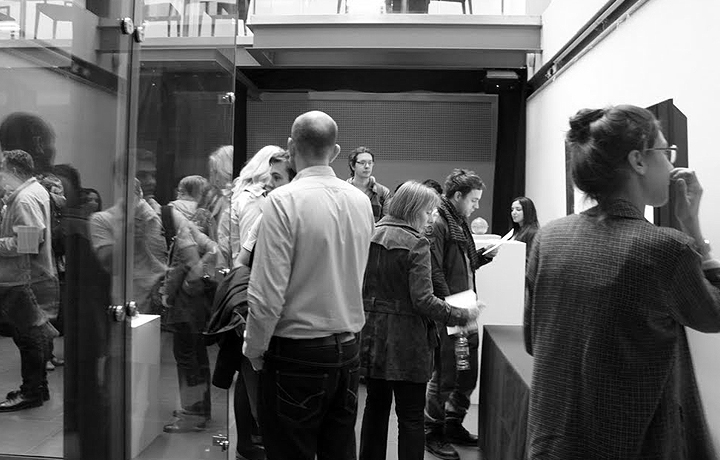
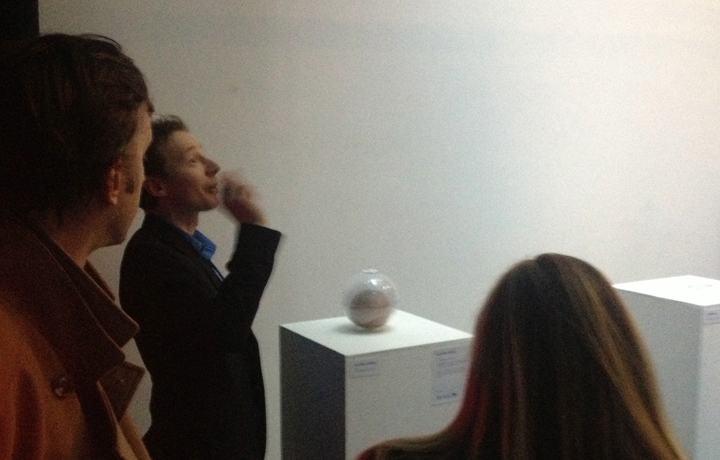
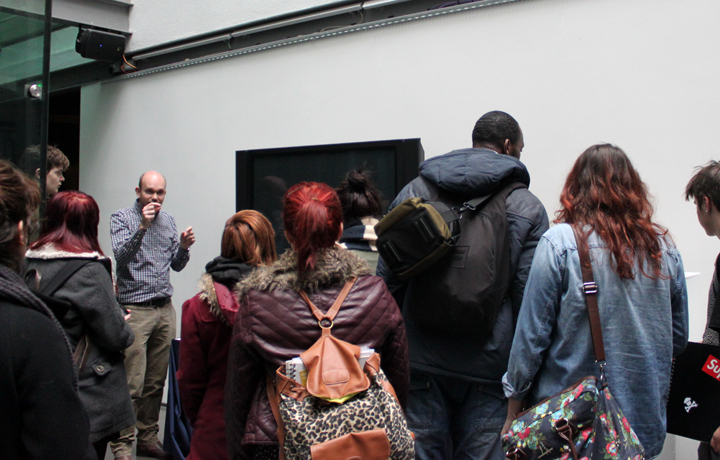
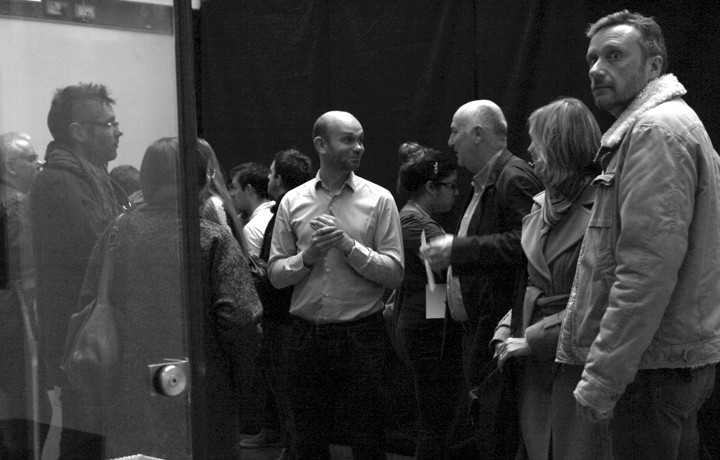
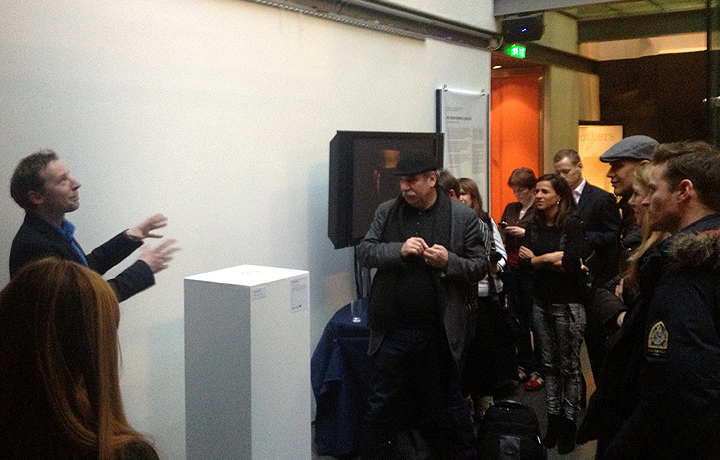
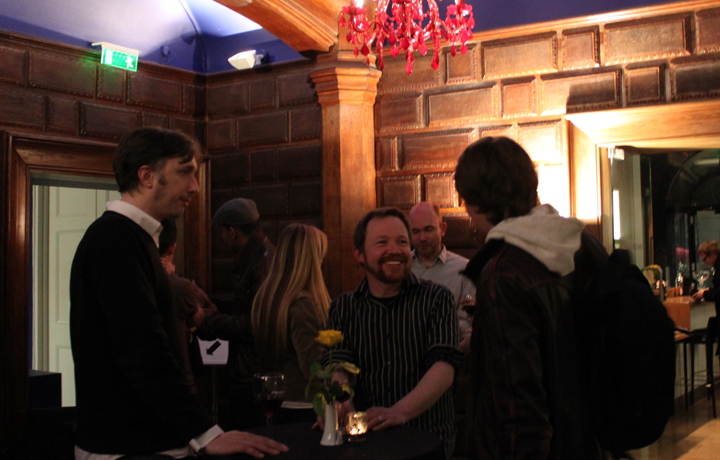
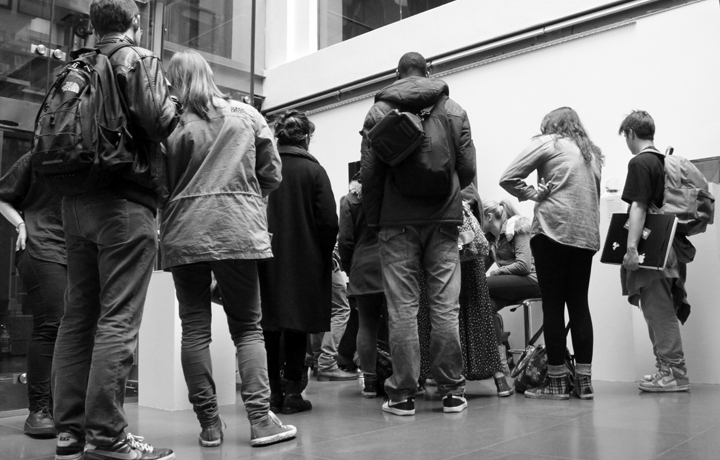
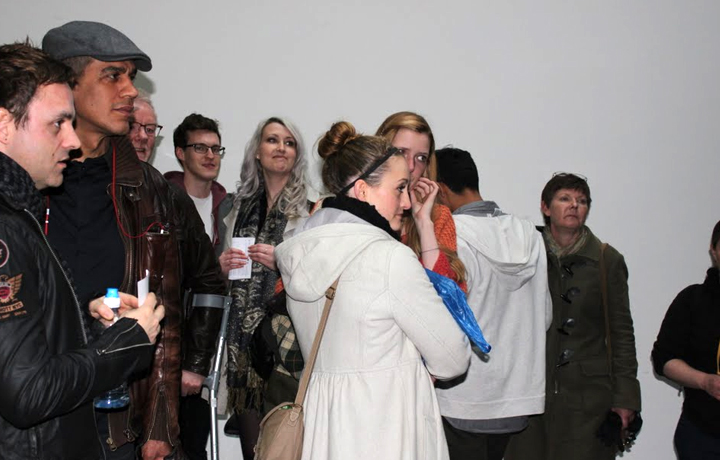
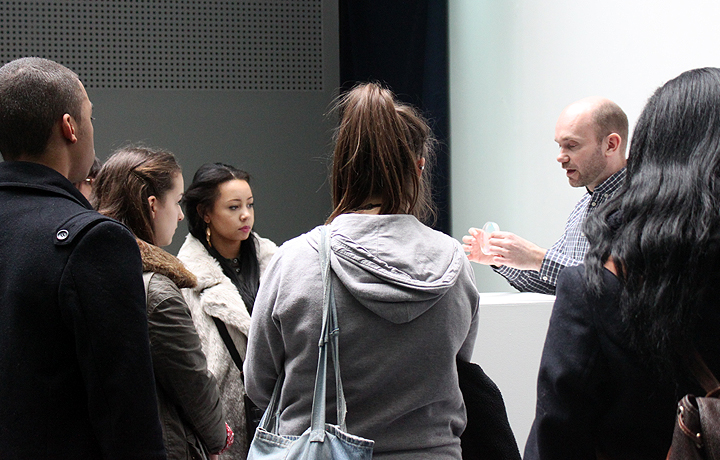
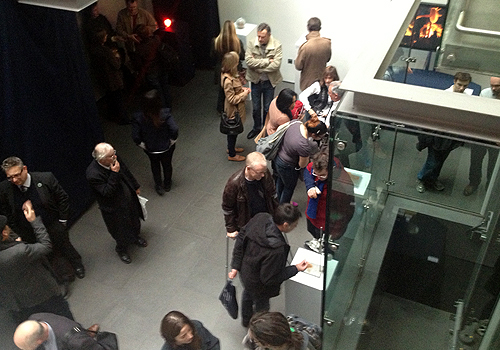
On the 10th of April, C-LAB and the University of Westminster hosted a special opening night bringing together a great number of audience and stakeholders.
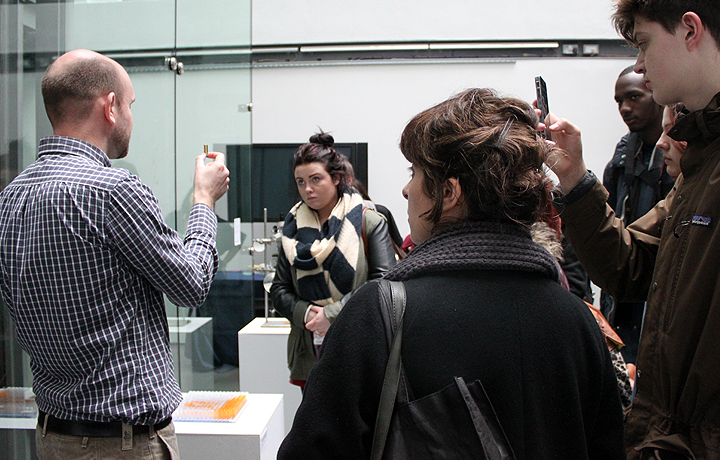
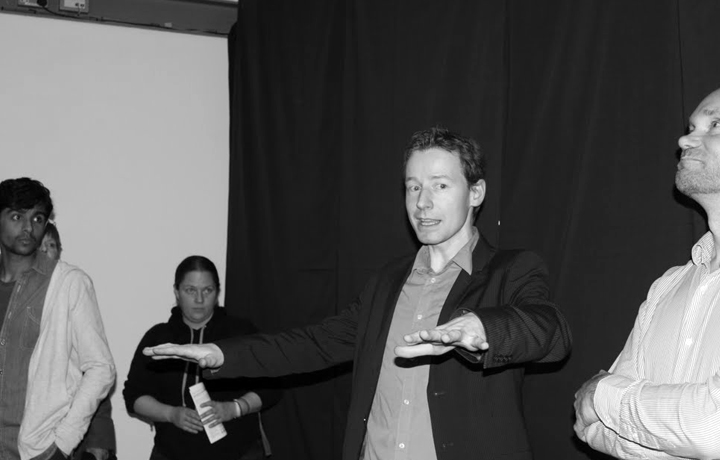
A talk was provided by Howard on his works and the process of developing these along with Dr Mark Clements from the biosciences instrumental in facilitating this research.
Awesome evening at the Art From SynBio exhibition! Great work Howard Boland! @clabblurb #SynBio #Synthetic #Biology twitter.com/labgeni_us/sta…
— LabGenius (@labgeni_us) April 10, 2013
The works provided a multifaceted way of experiencing synthetic biology and utilised a variety of senses to get the audience intimate with the material.
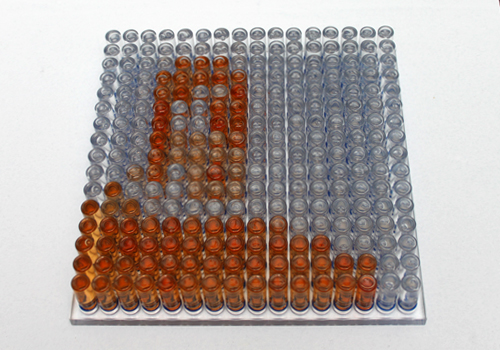
Some of the works were processed based and as days passed the works kept changing. Transient Images offered a way of producing an image only visible in an in-between state. The work uses sewage bacteria (donated by the London wastewater facilities) to degrade dyes. By varying the amount of inoculum the dye can be made to degrade at differing speed. Thus, in the work, a grid of small bottles (16x16) was set up and the inoculum calculated to form an accelerating portrait only visible in a transient state.
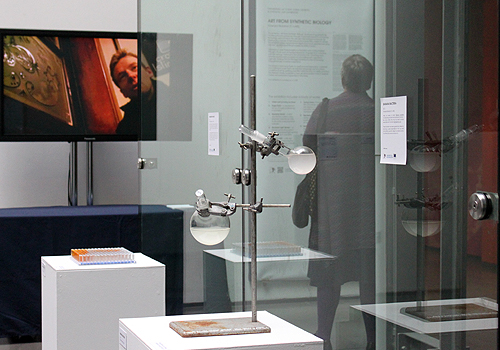
Transient Images
The image produced was a pixelated self-portrait of the artist whilst making the work. Transient Images starts with all tubes being orange, after sometime it reveals its message before disappearing with all tubes becoming transparent.
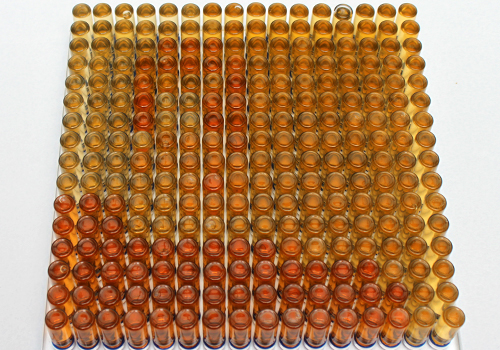
Transient Images
Art from Synthetic Biology involved not only highly experimental works but also living genetically modified matter surmounting to multiple challenges (e.g. regulatory, growing, time-scale, interaction, equipment, etc.). Importantly, it established the first exhibition of its kind in the UK and provided audience with multiple modes of experiencing material often inaccessible and intangible to our senses.
The challenge of setting up the exhibition in one week was enormous and could not have been done without the help of colleagues, friends and family. Firstly, we would like to thank Dr Mark Clements for pushing all the buttons to make this happen. The Cinti family for hosting us, for the many wonderful meals and in particular to Mauro for taxiing the equipment. Thanks also goes to the School of Life Sciences for helping put together a wonderful special evening. Finally, thanks to Maria Kyprianou for invigilating the exhibition, and to Inga Voldhaug and Colin Rivett for their help in setting up the exhibition, design and print material.