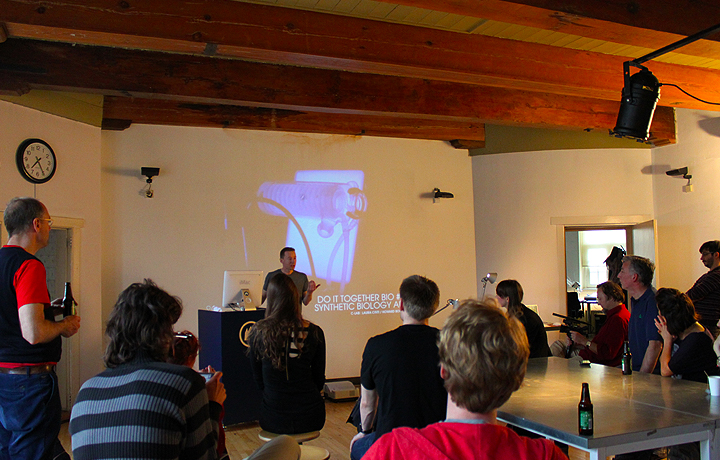
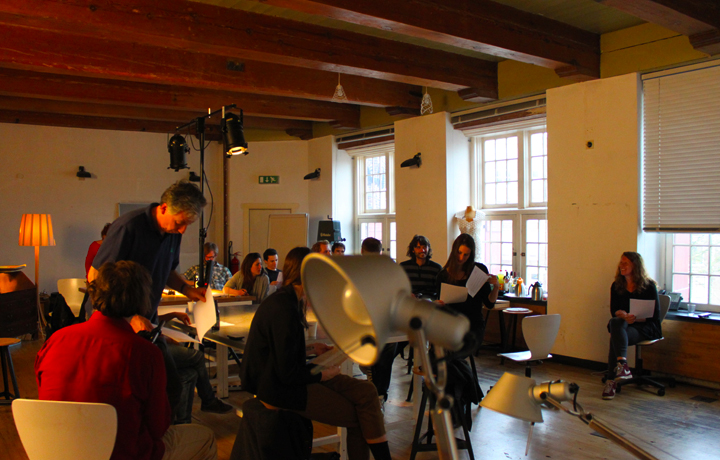
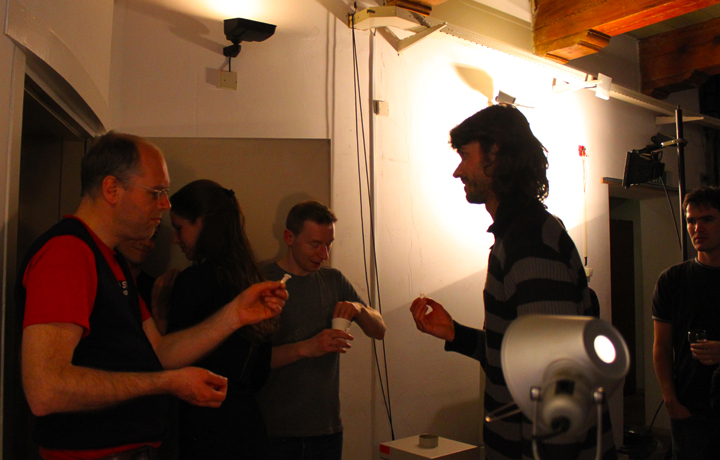
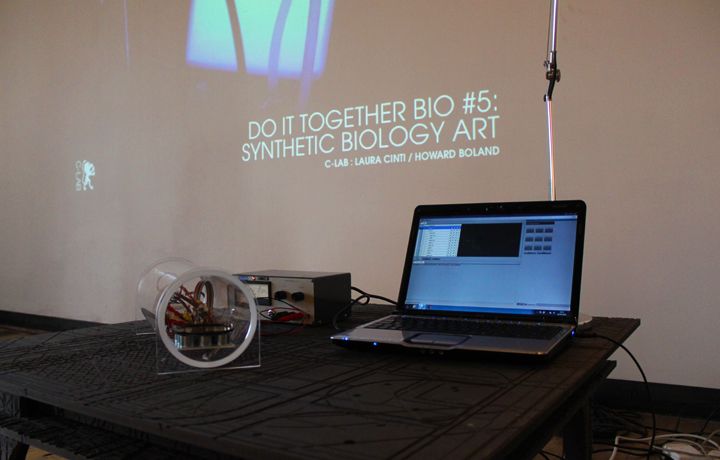
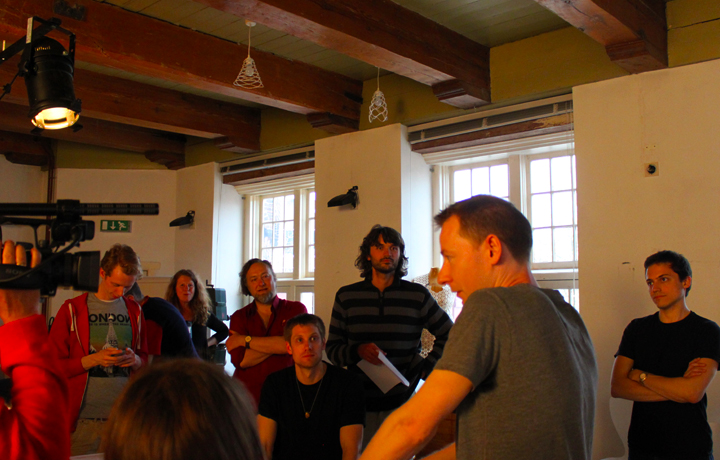
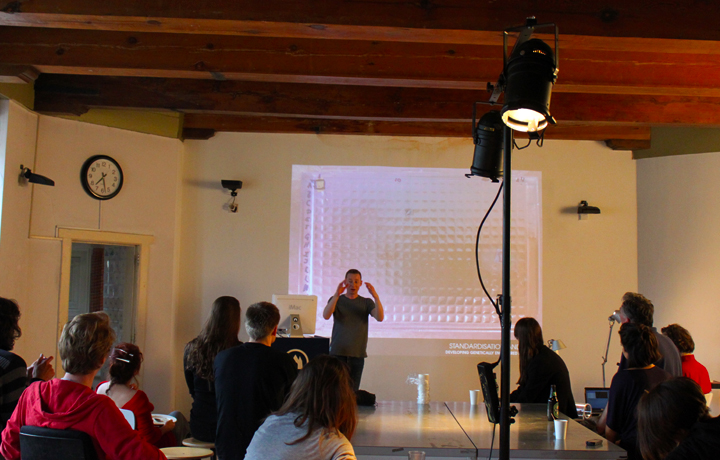
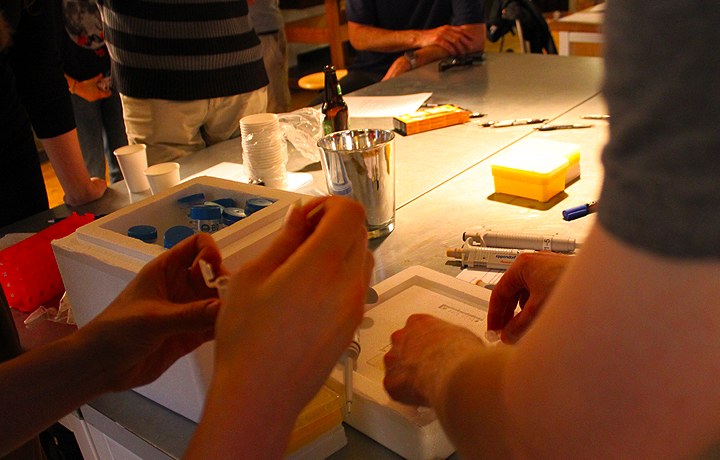
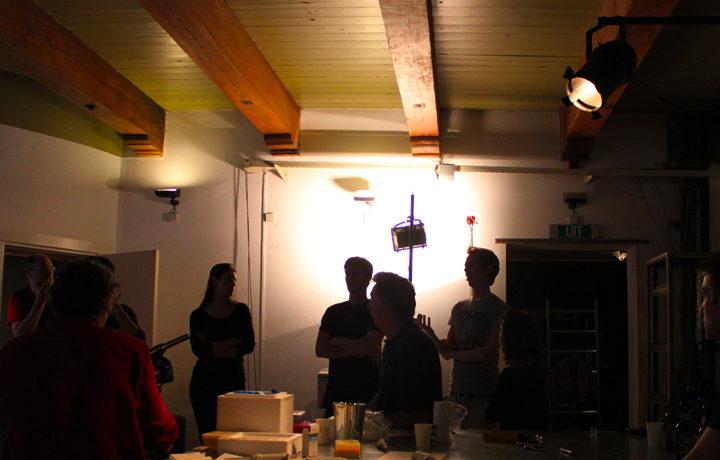
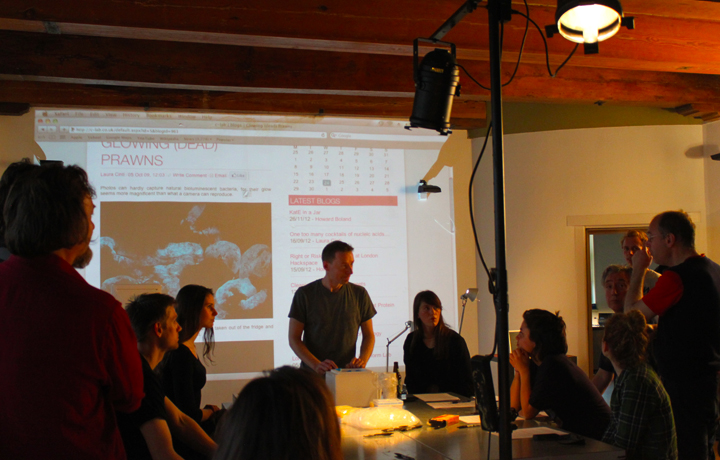
As part of Waag’s “Do it Together Bio” series, C-LAB was invited to hold a workshop related to our work using synthetic biology. The workshop was held at De Waag, one of the oldest building in Amsterdam and where Rembrandt famously painted The Anatomy Lesson of Dr. Nicolaes Tulp (1632).
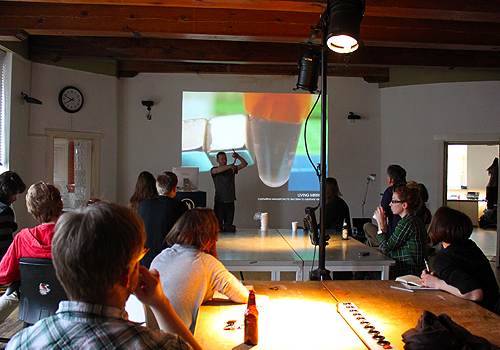
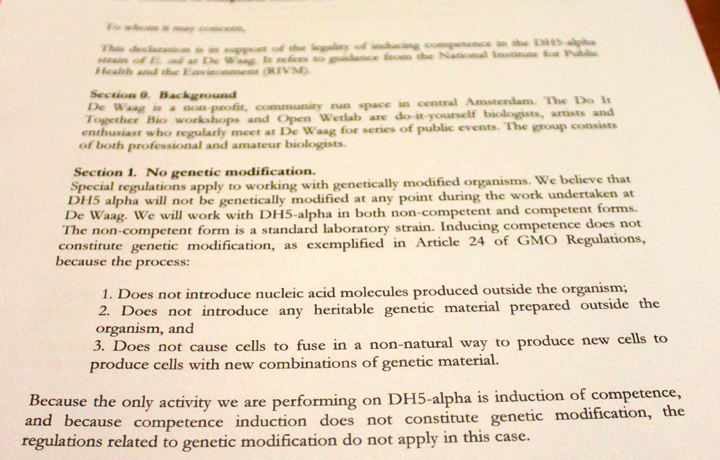
Genetic modification (GM) is an almost inherent feature of synthetic biology practices and an immediate challenge for the workshop since the premises did not hold a GM permit. Thus, our workshop was aimed at highlighting these issues also given that our current work Living Mirror is facing precisely these challenges of publicly exhibiting genetically engineering bacteria as part of our artistic display in the Netherlands.
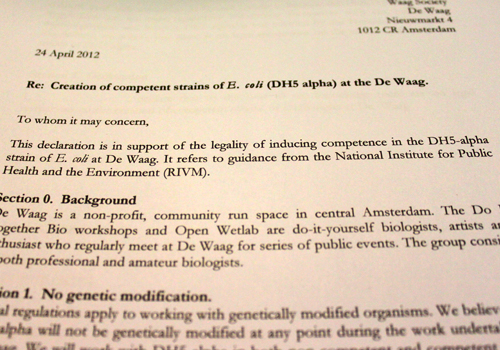
Only recently were we able to host UK’s first living synthetic biology exhibition and substantial effort was put in place to enable this possiblity and allowing a public audience to experience such organisms - many for the first time. How then, is the ongoing developments in DIY communities across Europe expected to partake in the exciting opportunities afforded by synthetic biology? Can we foresee a possibility of public participants at the Waag doing genetic manipulation and when? And what are the regulatory challenges we face when making these 'living' technologies public?
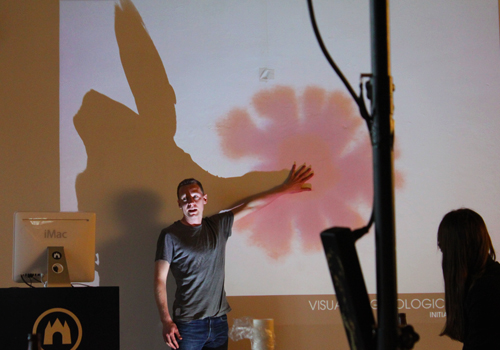
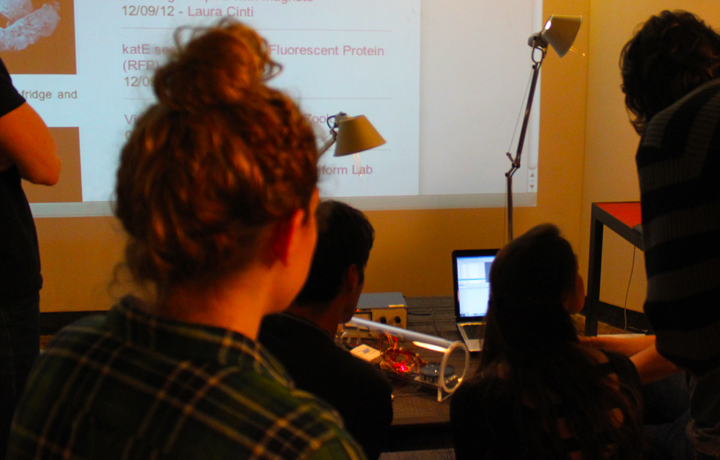
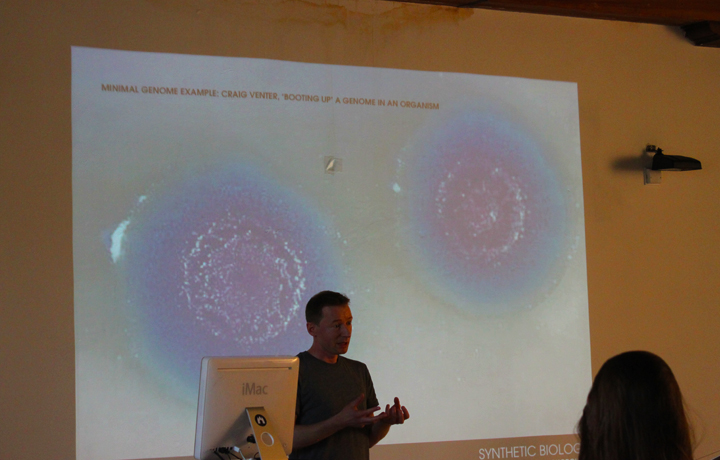
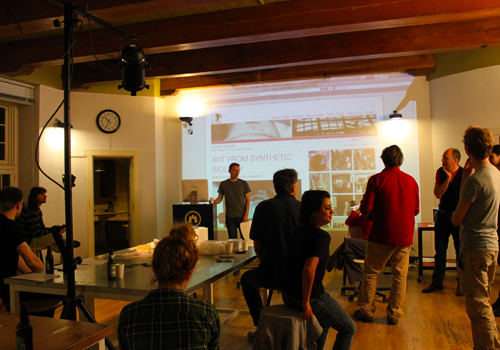
Certainly, we could not do genetics at the Waag at this point - so we asked: How close can we come and is it possible to follow a scientific protocol in a DIY environment? We decided to split the evening into several acts; the first looked at the opportunities and challenges surrounding synthetic biology by reviewing recent activities from C-LAB and Howard Boland’s laboratory based research.
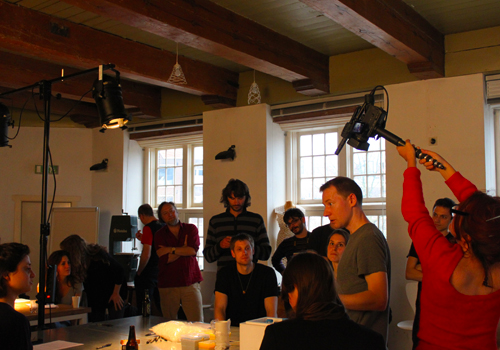
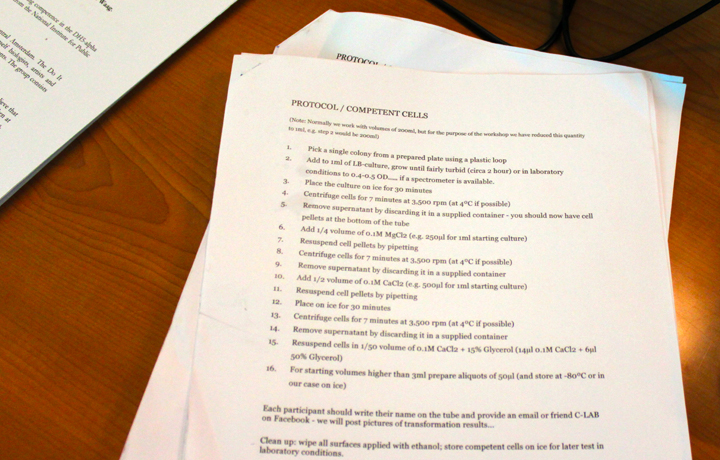
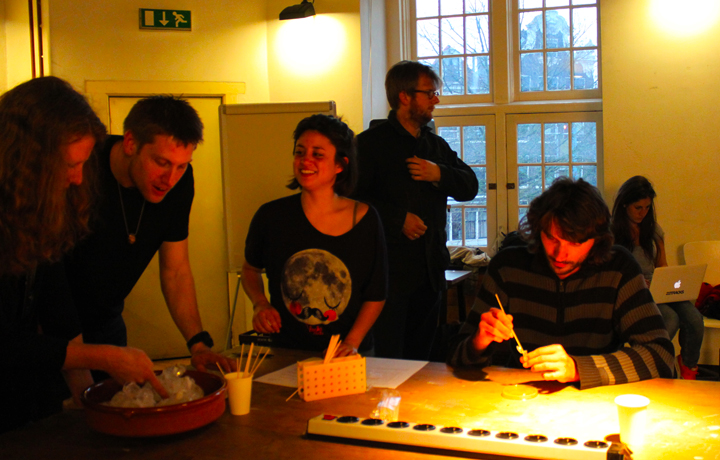
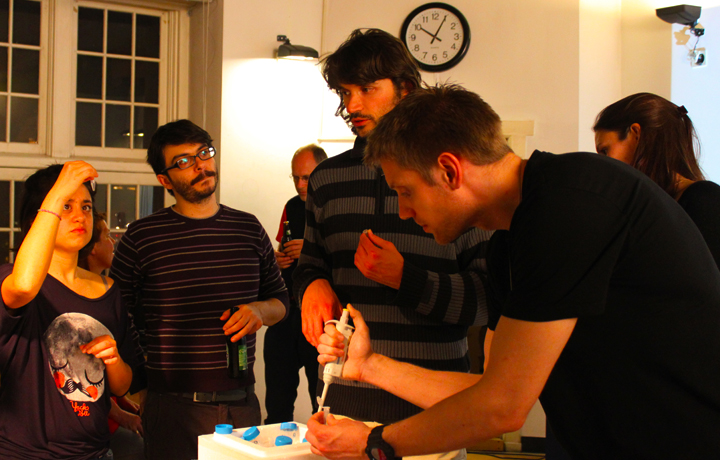
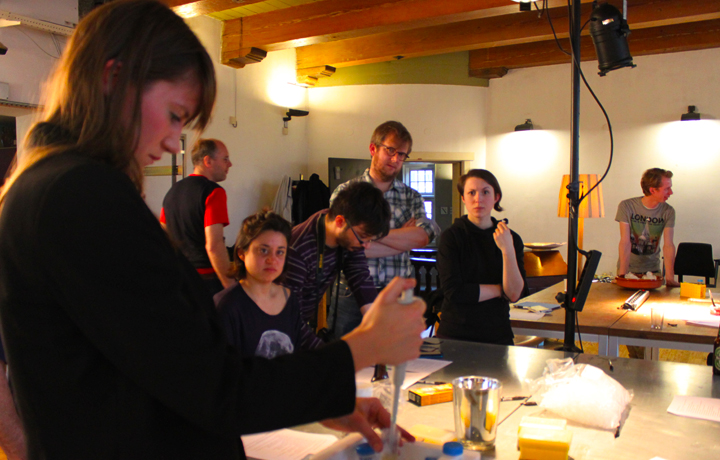
Secondly, by following a scientific protocol to make competent cells - or the step required to prepare cells (i.e. bacteria) to take up foreign genetic material.
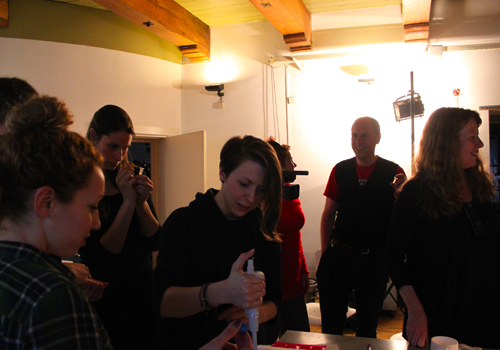
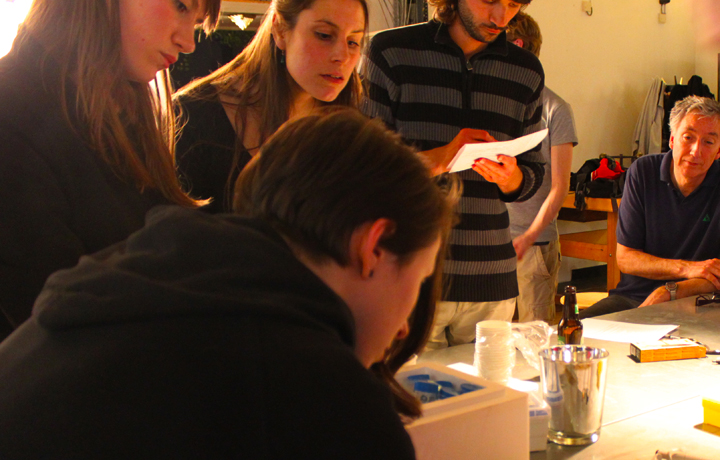
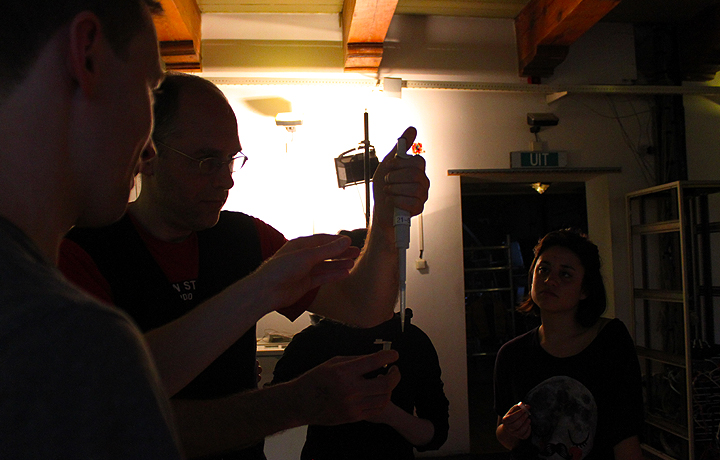
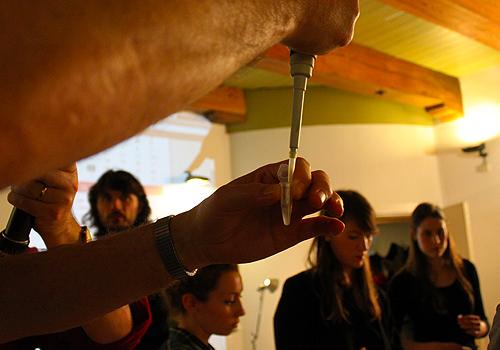
And taking account of particpants arriving from a plethora of background with varying experience of using scientific tools (i.e. pipettes, centrifuges and microscopes) such as those used in genetics.
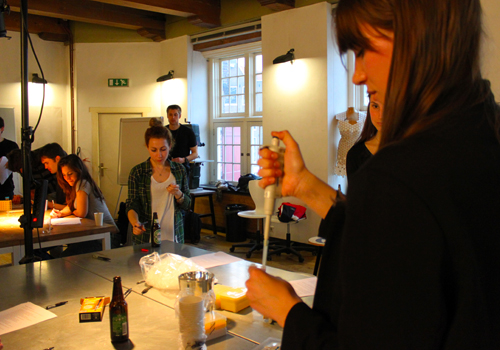
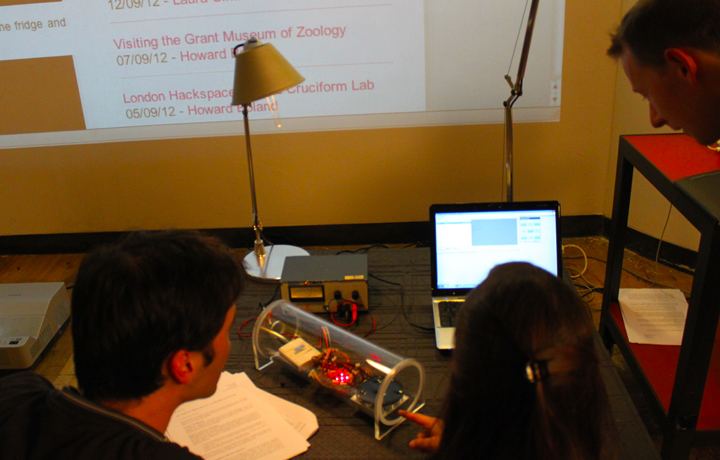
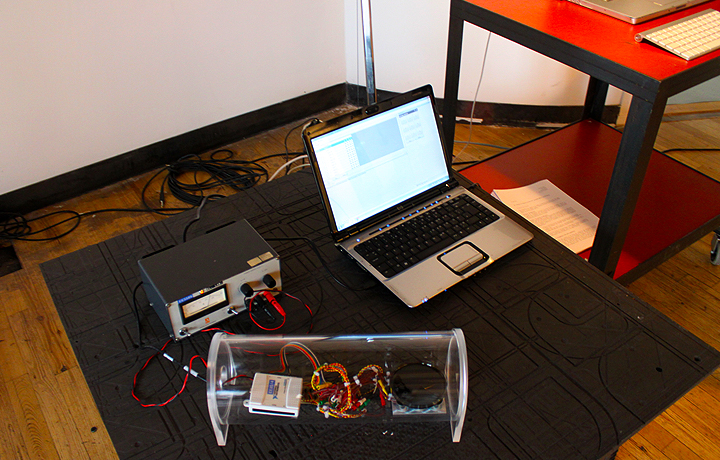
Thirdly, by looking at the current prototype and the development of Living Mirror that will develop and make use of novel genetic organisms in public settings.
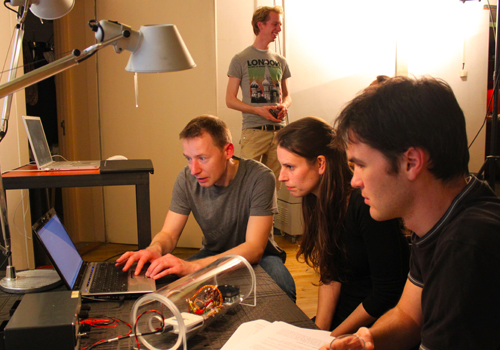
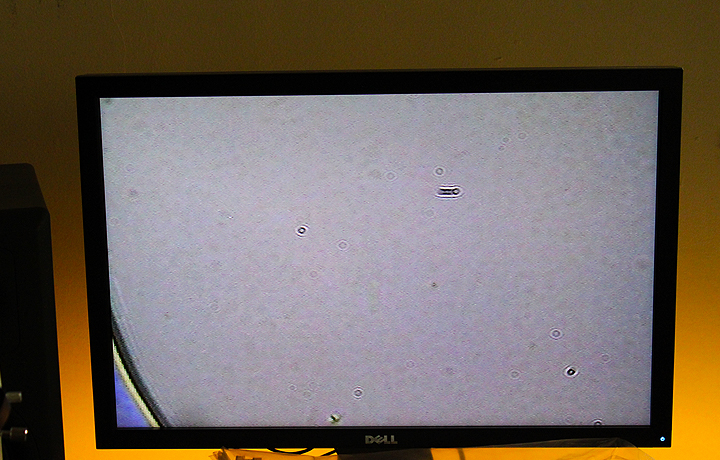
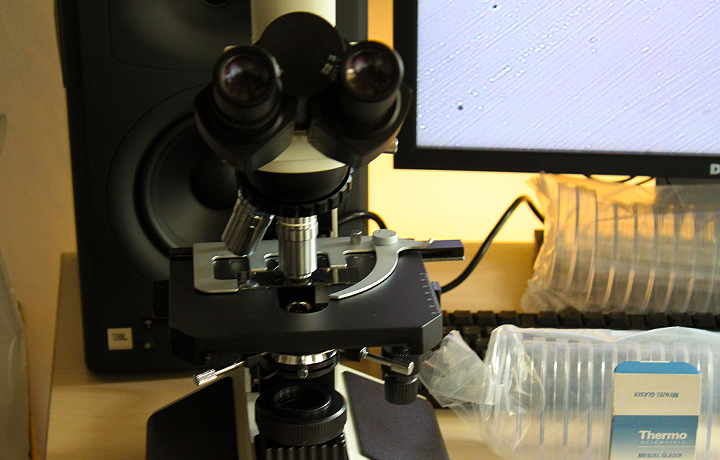
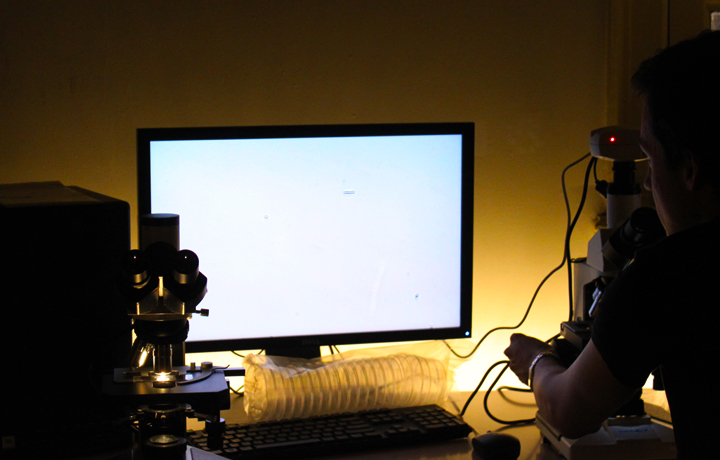
And finally, by exploring interactive potentials in bacteria through Bacteria Compass that employs magnetic nanoparticles, bacteria, microscopes and an external magnet.
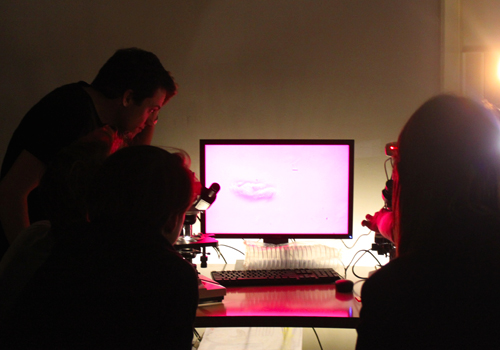
Through these acts we sought to get intimate with living cells and explore scientific techniques for manipulation, rather than the more common DIY practices focusing on building instruments.
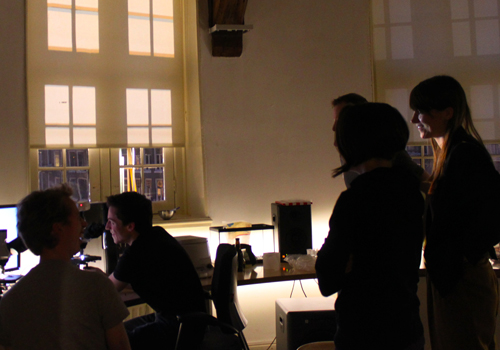
The new DIY laboratory set up by the team at Waag allowed us to follow most of the steps required for preparation of cells to be modified.
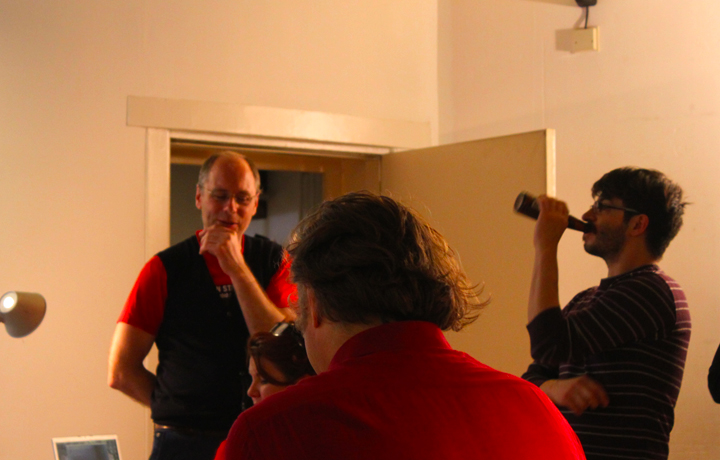
We concluded the workshop with a discussion on whether the DIY community should be allowed to take the next steps - of introducing foreign genetic material and what needed to be in place for this to happen. For instance, how would they handle disposal of material and how would they regulate internally their own safety protocols.
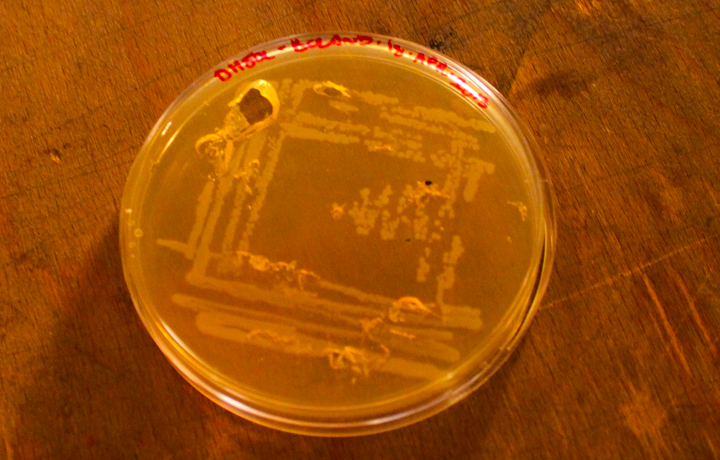
To test the cells some of the partipants had prepared, we brought these back to the lab and preformed a transformation to see if a DIY community can make competent cells in a makeshift lab.
Indeed, the result were quite stunning - showing that there are certaintly potentials for these labs not only to follow scientific protocols but also to produce excellent compentency results.